

 ENG
ENG
 English
 中文简体
中文简体 русский
 Français
 Español
 عربى
عربى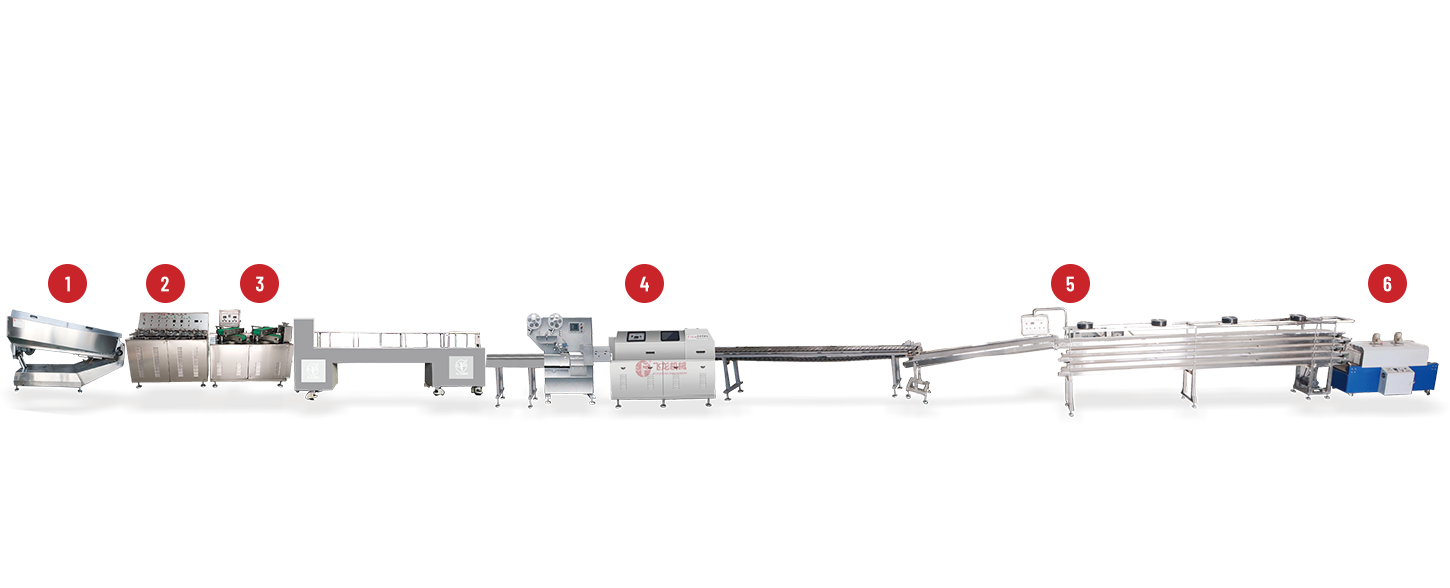
How an Automatic Rainbow Lollipop Machine Manufacturer Improves Production Efficiency
Stand beside a production line during a busy week and you'll notice a dozen small frictions that add up: a sticky hopper that clogs every few hours, someone chasing a runaway stick, a wrapper jam at the end of the line. Any one of these might be fixed in minutes. Together they cost hours — sometimes days — across a quarter. That's where the role of an automatic rainbow lollipop machine manufacturer becomes more than "supplier." It becomes a partner in making the whole operation smoother, faster and less surprising.
Why focusing on machine design changes more than speed
People often equate efficiency with speed. Turn up the RPM and you're efficient, right? Not always. Speed without control creates scrap, rework and more time cleaning up mistakes. The smarter path is to squeeze gains from reduced downtime, lower scrap, easier changeovers, and fewer manual interventions. These are the improvements an experienced manufacturer targets.
Think of it this way: an extra 10% line speed is nice — until scrap rises by 20% because the stick insertion tolerance tightened. The better investment is a machine that holds dimensional tolerance and keeps scrap low at higher speeds. That requires deliberate design choices.
Core machine improvements that translate to real gains
Below are the specific aspects machine-makers focus on. Each item links to a practical improvement on the floor.
1. Accurate multi-color metering
Rainbow lollipops are, by definition, about color layers. If color feeds are inconsistent, you get blotches, color bleed, or excessive trimming. High-quality metering valves and positive-displacement feed pumps reduce variation. The result: less manual trimming, fewer rejects and a predictable visual appearance.
Why it matters: less scrap, more packable product.
2. Stable forming with synchronized timings
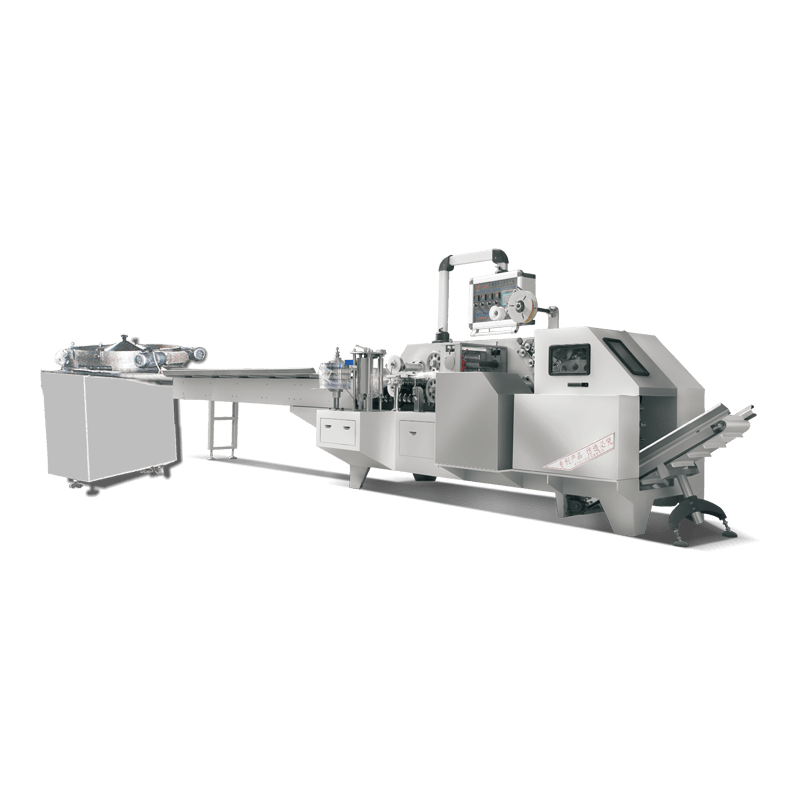
Forming and stick insertion must act like a well-rehearsed duet. If timing drifts, sticks misplace or candy misshapes. Robust cam profiles, servo drives, and electronic synchronization ensure timing accuracy. Manufacturers that supply proper synchronization reduce rejects and wrapper jams.
Why it matters: fewer stoppages at the wrapper and better downstream flow.
3. Responsive temperature control
Candy viscosity changes with small temperature shifts. Zones with precise PID controllers and multiple sensing points prevent the viscous mass from getting too thick or too thin. Machines that control temperature tightly avoid viscosity-related blockages and inconsistent portioning.
Why it matters: consistent portion weight and surface finish.
4. Quick mold changeover systems
Seasonal SKUs and custom orders demand fast changeovers. Quick-release mold systems, indexed alignment, and minimal-tool changeovers cut changeover time from hours to minutes. That translates into significantly more productive hours in a week.
Why it matters: agility during promotions, minimal downtime for format changes.
5. Automated trimming and scrap management
A smart system trims excess plastic or candy cleanly and returns allowable trim to the process or directs it into waste handling. Automated scrap handling reduces manual cleanup and the risk of contamination.
Why it matters: reduced cleaning time and improved material utilization.
6. Hygienic, tool-free access for cleaning
Cleaning is a major source of downtime. Machines designed for tool-free disassembly, minimal crevices and rounded surfaces are faster to clean to food-grade standards. Manufacturers that build this in from the start save operators hours each shift.
Why it matters: faster sanitation cycles and fewer production stoppages.
7. Built-in diagnostics and operator guidance
Clear HMIs that show the fault, the likely cause and the next steps cut troubleshooting time. Remote diagnostics from the manufacturer further shorten recovery from odd failures.
Why it matters: less time guessing, more time running.
The systems around the machine that amplify gains
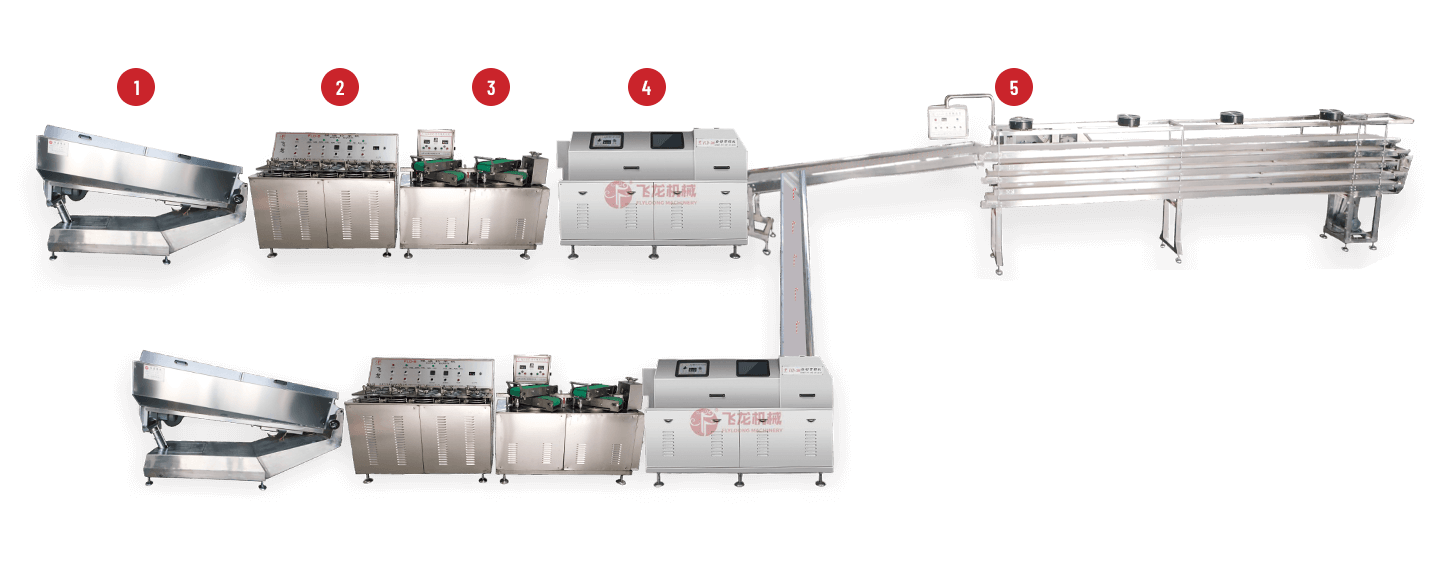
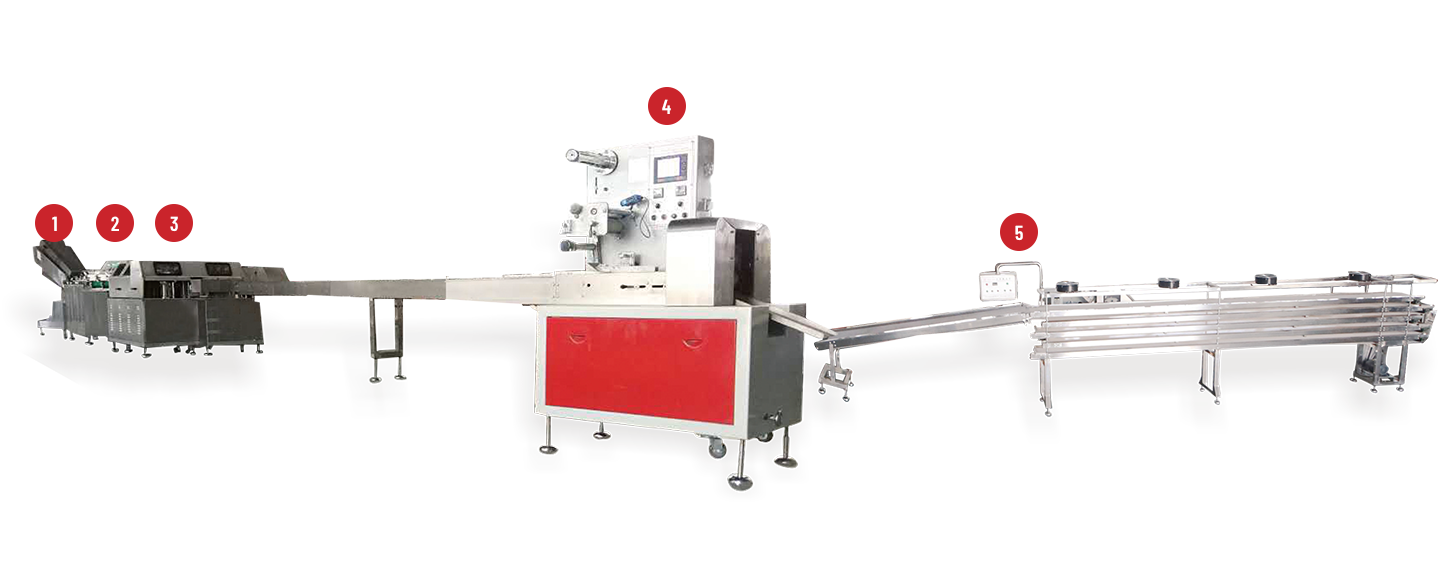
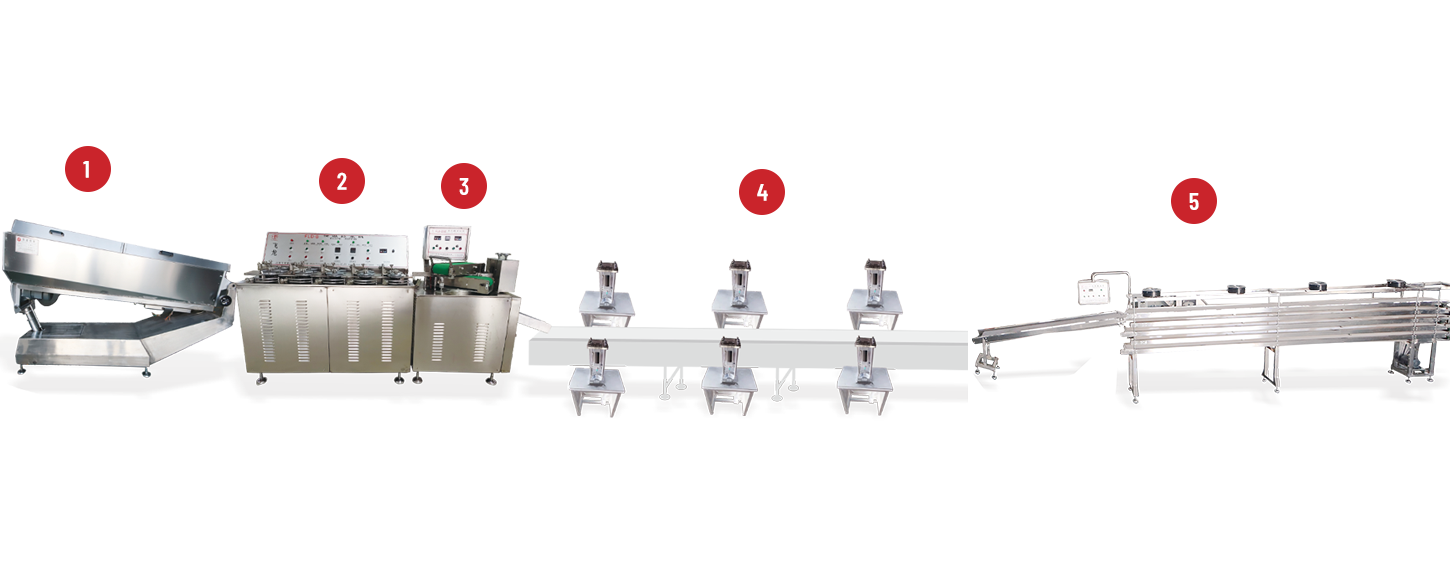
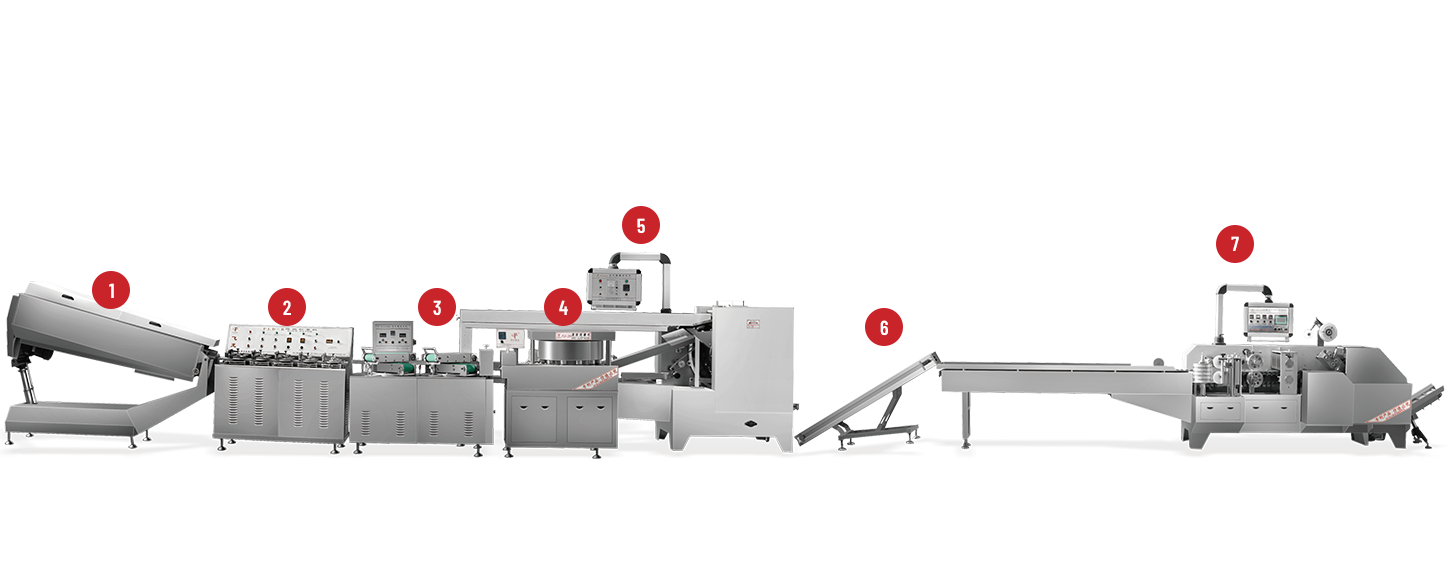
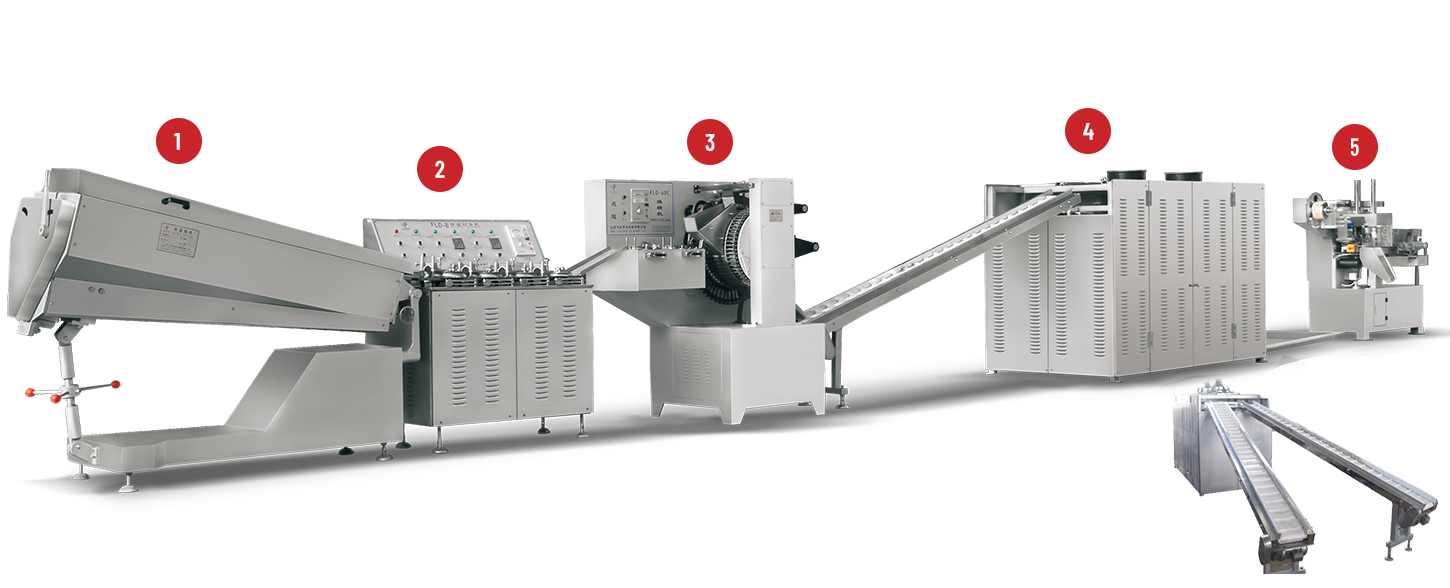
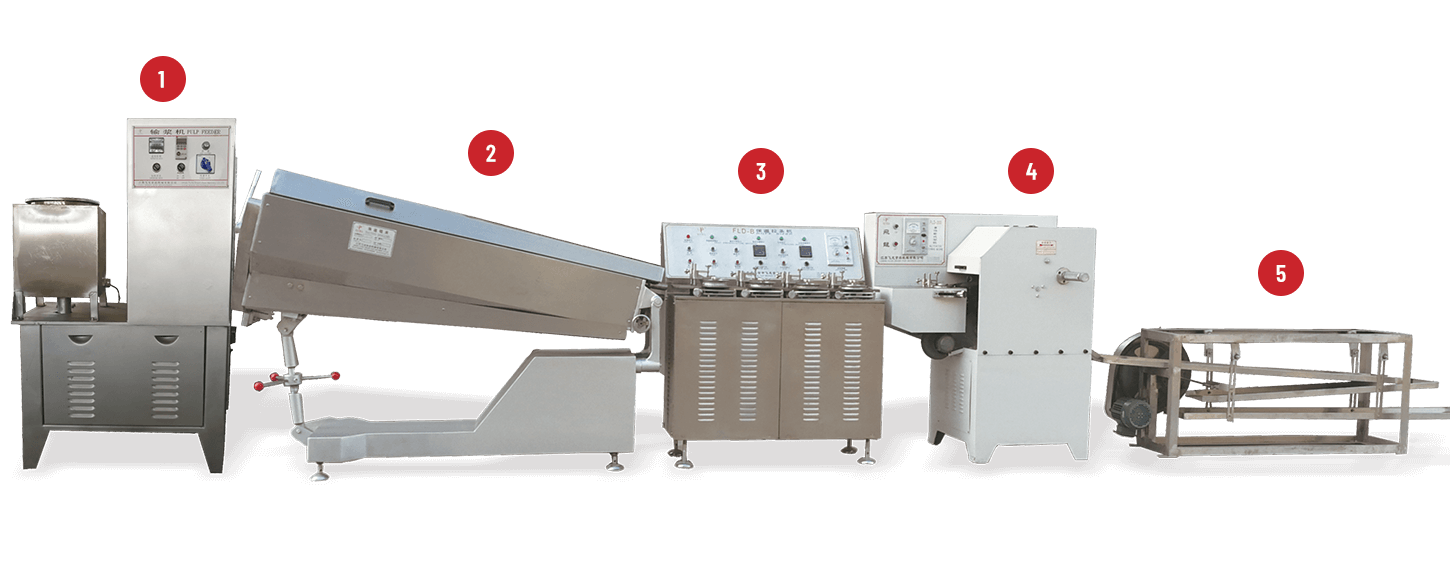
You buy a great machine and install it into a messy layout and you'll only see part of the benefit. The machine alone is not the whole story. A manufacturer that helps you optimize the entire line — layout, buffering, utilities — amplifies efficiency.
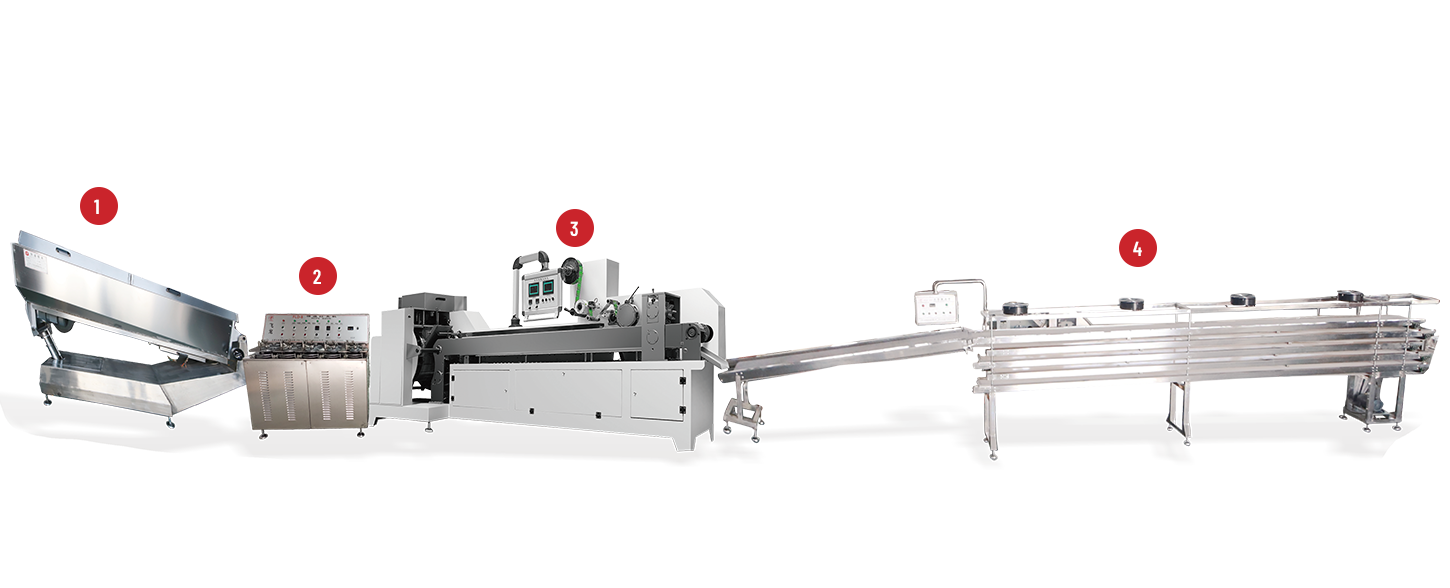
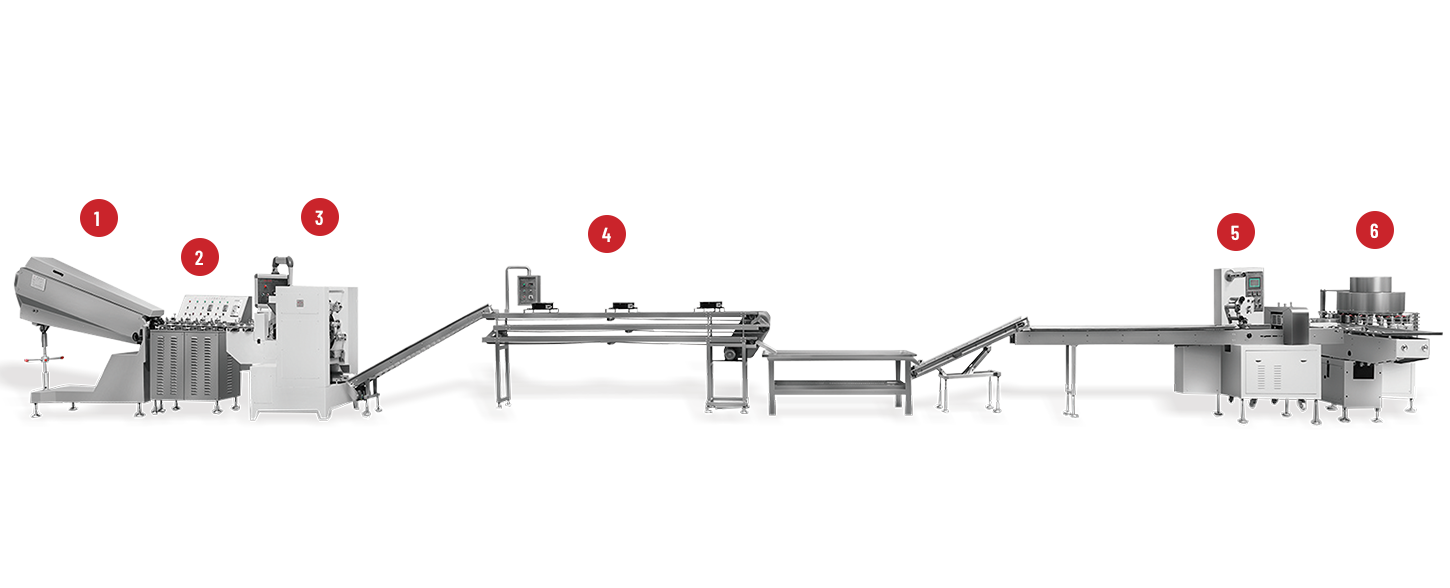
Layout and flow improvements
Align feeding, forming, cooling and wrapping so transfers are direct and gravity-assisted. Even short conveyors or guided chutes that eliminate handoffs reduce pick-and-place errors.
Buffers and staging
A small buffer between forming and wrapping allows one station to pause briefly without stopping the whole line. Buffers are like shock absorbers for production variability.
Utility sizing and routing
Undersized steam lines or long runs of compressed air can cause pressure drops. Plan utilities early with the manufacturer; proper sizing prevents slowdowns.
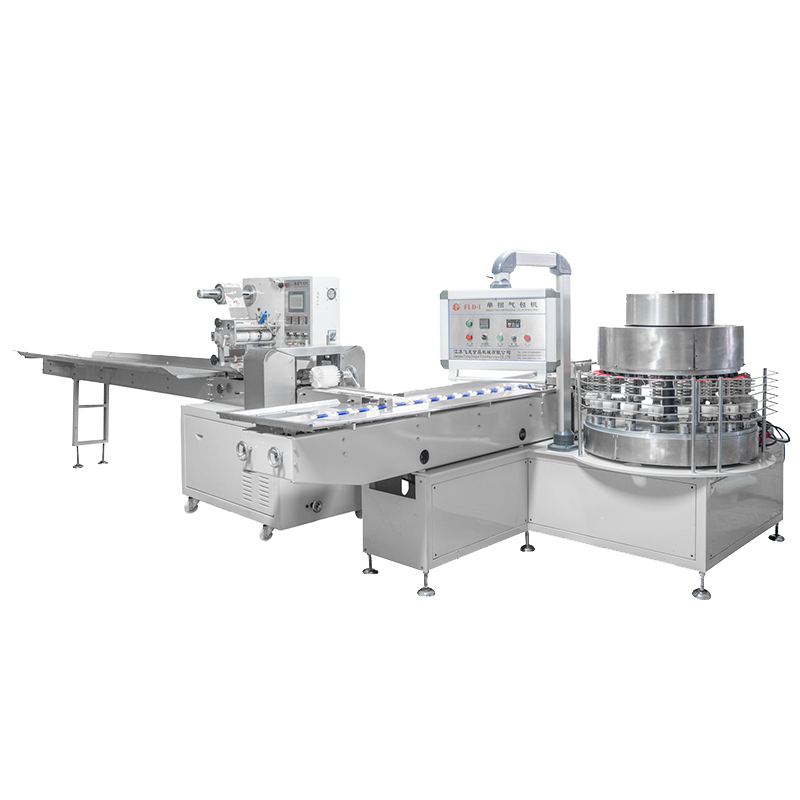
Packaging alignment
Sometimes "bottleneck" is just a mismatch: the wrapper cannot keep pace with a newly upgraded forming rate. Synchronization across the whole line is essential.
Processes and practices that manufacturers support beyond the hardware
A good vendor provides process expertise. They help you tighten control, reduce variability and document how to run reliably every shift.
Recipe management
Store and recall process recipes. One button to change over between SKU A and SKU B. Less human error, faster changeovers.
Batch records and traceability
Automatic logging of batch data helps you find and fix problems quickly. When a customer reports an issue, you can trace back to the exact settings, lot numbers, and times.
Preventive maintenance programs
Scheduled maintenance reduces surprise breakdowns. A manufacturer that provides an MRO parts list and recommends intervals helps you avoid long repairs.
Training and SOPs
Hands-on training for operators reduces false alarms and improves first-response to minor faults. Short, visual SOPs and laminated checklists at the machine are practical and effective.
Measuring efficiency: what metrics actually move the needle
If you want real improvement, measure it. Track a handful of actionable KPIs.
- OEE (Overall Equipment Effectiveness) — tracks availability, performance and quality.
- Yield rate — good units divided by total units produced.
- MTTR (Mean Time To Repair) — average time to recover from a stoppage.
- MTBF (Mean Time Between Failures) — frequency of breakdowns.
- Energy per unit — helps evaluate cost efficiency.
Pick baseline values, then run the line for a month, log events, and compare after implementing changes. Small percentage gains compound over time.
The human element: operators and maintenance staff
Machines are only as good as the people who run them. The common reason automated lines fail to reach promised throughput is human process drift.
Invest in practical training
Show operators common failure modes and let them practice recovery actions. Run drills: what to check for first, what to leave running, and how to secure product safety.
Encourage operator ownership
When operators feel they own the machine's performance (and have the authority to perform basic interventions), mean times to repair fall.
Cross-train maintenance staff
When someone is absent, another trained technician can step in. That reduces single points of failure and helps maintain OEE.
Practical maintenance and spare parts strategy
Downtime often comes from waiting for parts. Plan smart.
- Maintain a critical spares kit: belts, sensors, seals, common servo fuses.
- Track wear parts: identify items that commonly wear out and track their life cycles.
- Use predictive monitoring: vibration, thermal imaging and current draw can flag failing bearings or motors before catastrophic failure.
- Work with vendors on times: negotiate times for specialty parts or find local equivalents.
A proactive approach reduces unscheduled stops.
Cleaning and hygiene: efficiency without compromise
Food production must meet strict hygiene rules. But cleaning can be a productivity killer if not accounted for.
- Design for cleaning: smooth surfaces, sloped trays, and tool-free access reduce clean time.
- Plan cleaning windows: short, frequent cleaning cycles often cause less disruption than long, infrequent sessions.
- Train for sanitation efficiency: show technicians how to disassemble and reassemble quickly and safely.
Manufacturers that prioritize hygienic design help plants stay compliant and productive.
Energy and material use: the cost side of efficiency
Reducing operating cost per unit is as important as raw throughput.
- Insulate heated tanks and piping: reduces heat loss and electrical demand.
- Optimize idle modes: machines should scale down consumption during pauses without a full restart.
- Minimize trimming waste: precise metering and forming reduce ingredient loss.
- Recover acceptable trim: where food safety rules allow, recovered trim can be reintroduced after proper processing.
Small energy savings compound into real annual cost reductions.
Scaling up: how to add capacity without chaos
When you need more output, growth must be controlled.
- Add modular stations first: expand feeding heads or add a parallel forming line.
- Pilot runs at full speed: validate recipes and wear patterns at target throughput before committing capital.
- Standardize recipes and controls across lines: consistency between lines reduces QA headaches.
- Consider packaging as part of the expansion: ensure wrappers and case packers can handle higher throughput.
Scaling that ignores the whole line often leads to new bottlenecks.
A short vendor-evaluation checklist
If you're in the market, here's a short list to guide vendor selection.
- Can the machine store and recall recipes?
- How long is average changeover for molds? Tool-free?
- Does the vendor offer on-site commissioning and training?
- Is remote support and diagnostics available?
- What hygienic design features reduce cleaning time?
- Can feeding systems handle your color complexity?
- Are utility requirements (steam, power, air) compatible with your site?
- What are energy consumption figures at typical speeds?
Ask for references: a vendor who can point to a similar plant is more credible than one offering only demo videos.
Common pitfalls and how to avoid them
Pitfall: Buying the fastest machine without addressing downstream packaging.
Solution: Match capabilities across the line. Balance, don't overspec one element.
Solution: Maintain a spares kit and negotiate vendor commitments.
Pitfall: Ignoring operator training.
Solution: Invest in hands-on training tied to real failure scenarios.
Pitfall: Tight layouts that complicate maintenance.
Solution: Plan for access and movement during installation.
Efficiency is an ecosystem
Improving production efficiency isn't a single act. It's the accumulation of dozens of decisions: product design, machine features, layout, training, maintenance and supplier relationships. A competent automatic rainbow lollipop machine manufacturer helps you see the whole system and offers more than equipment: they contribute process know-how, spare parts planning, and long-term support.
Start small. Pick two or three friction points to attack — trimming waste, changeover time, or downtime — and measure results. With steady focus, small percentages add up. In a year the difference is visible not just on the line, but on the balance sheet.
 +86-(0)515-8465666
 +86-(0)515-85566996
 +86-138 1559 9708
 flyloong@flyloongcn.com
 Home
Home