

 ENG
ENG
 English
 中文简体
中文简体 русский
 Français
 Español
 عربى
عربى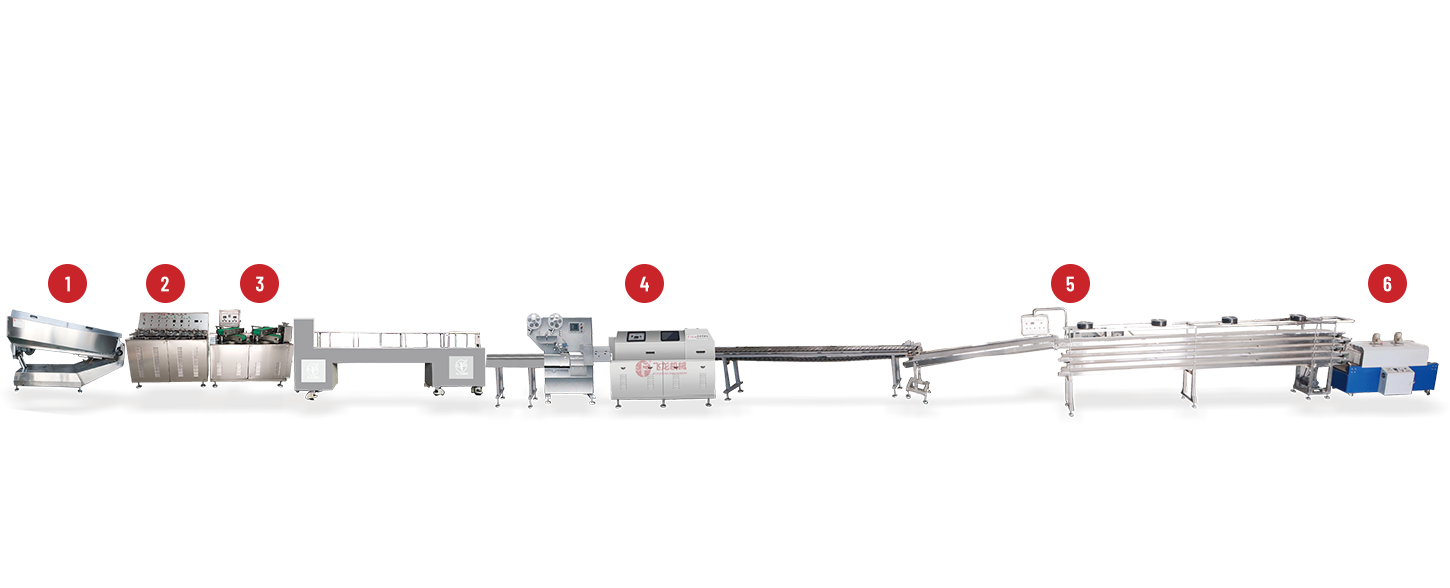
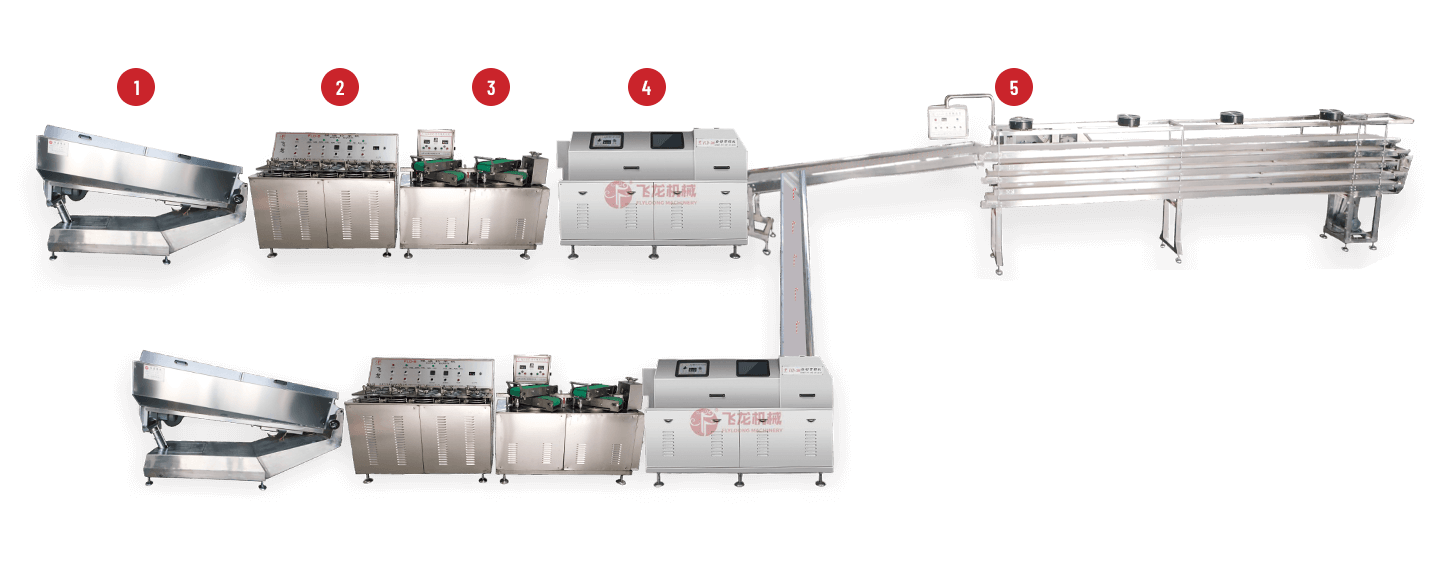
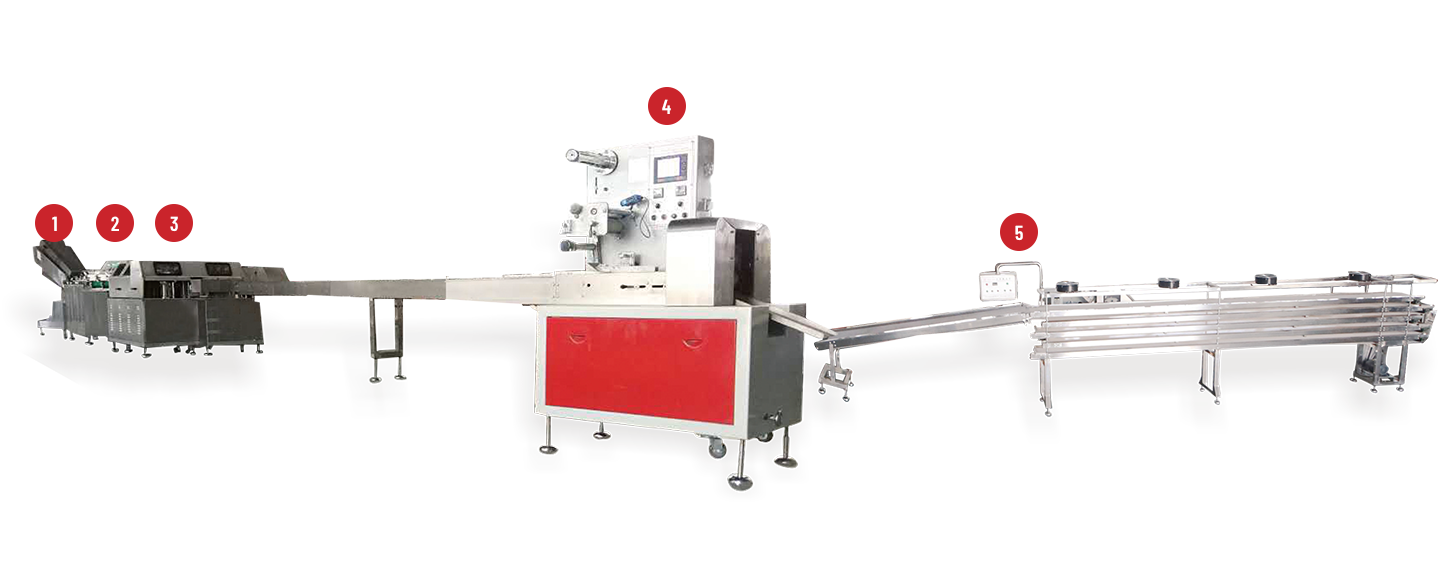
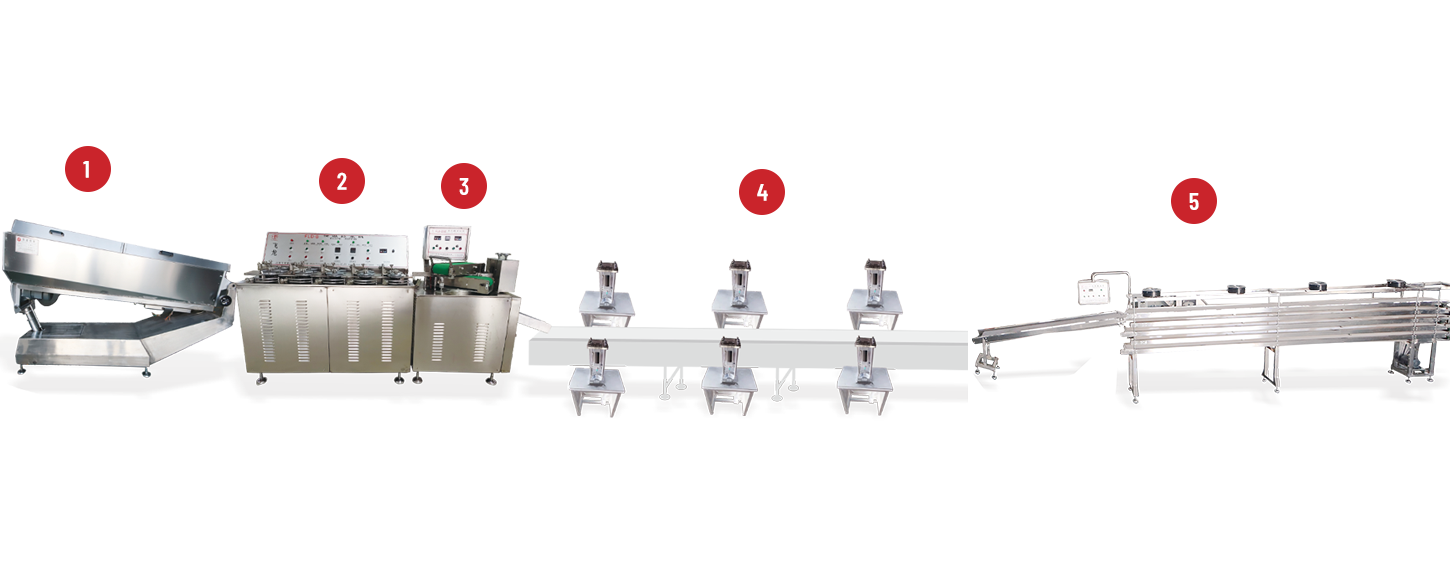
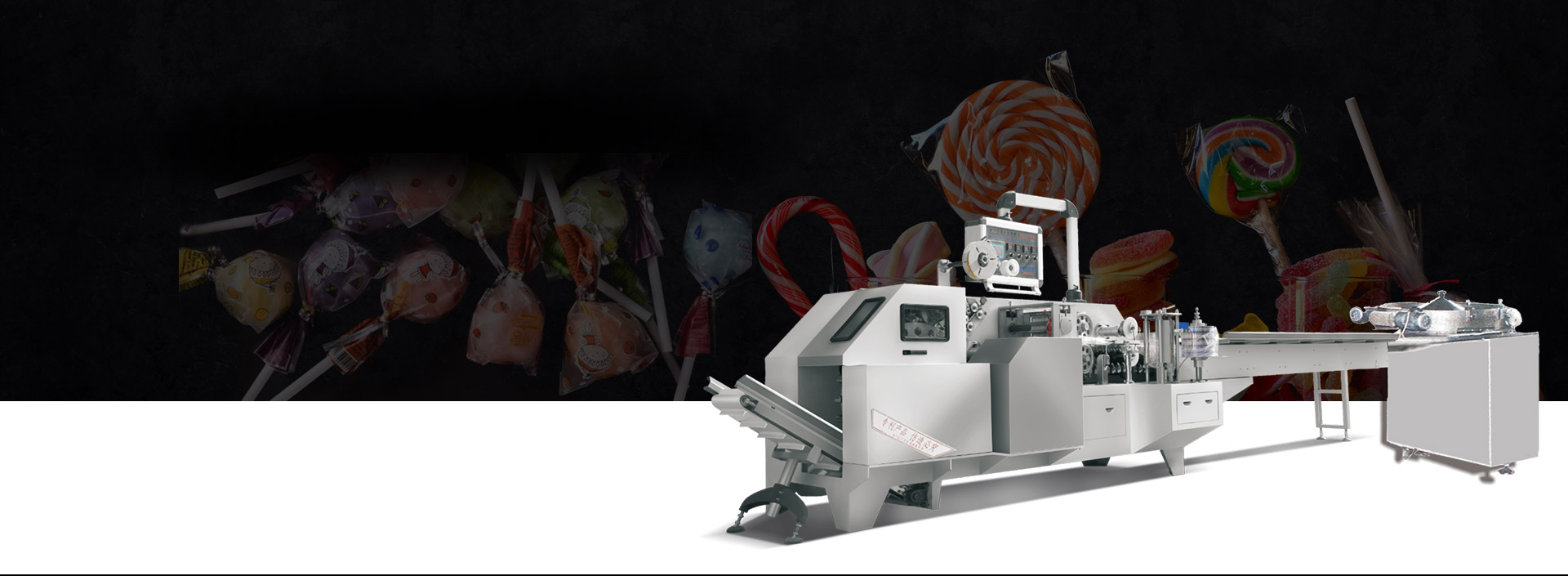
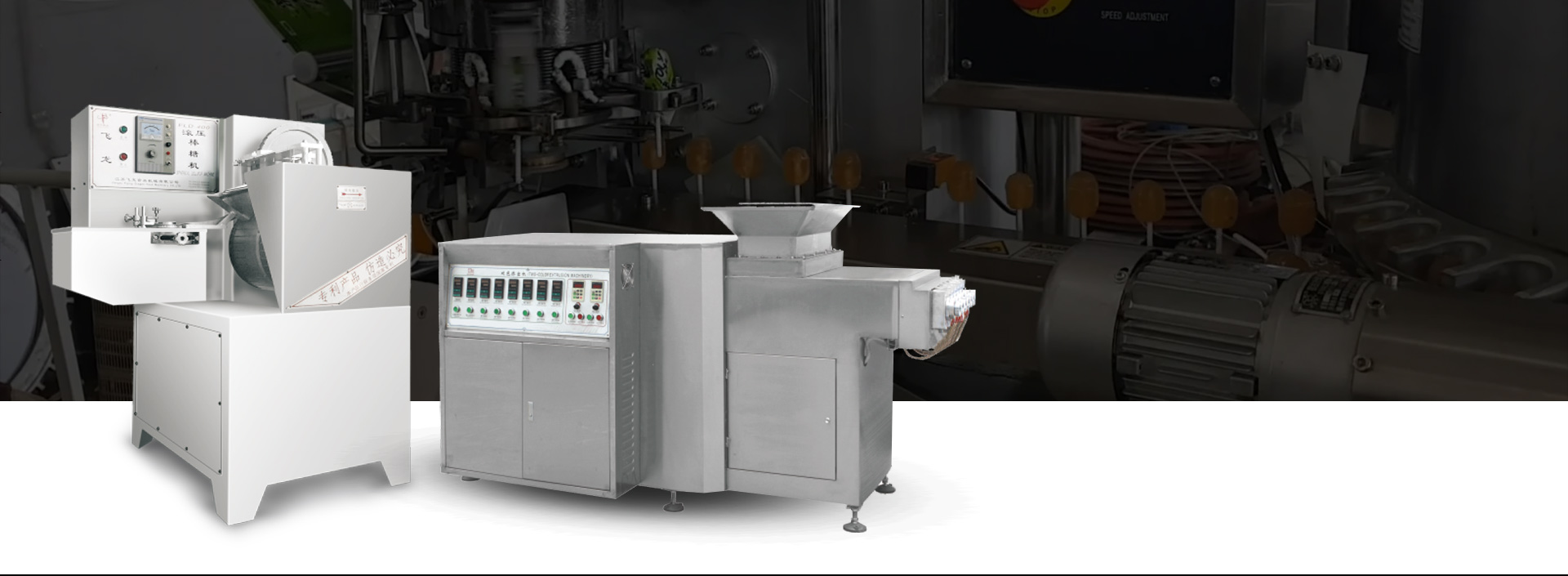
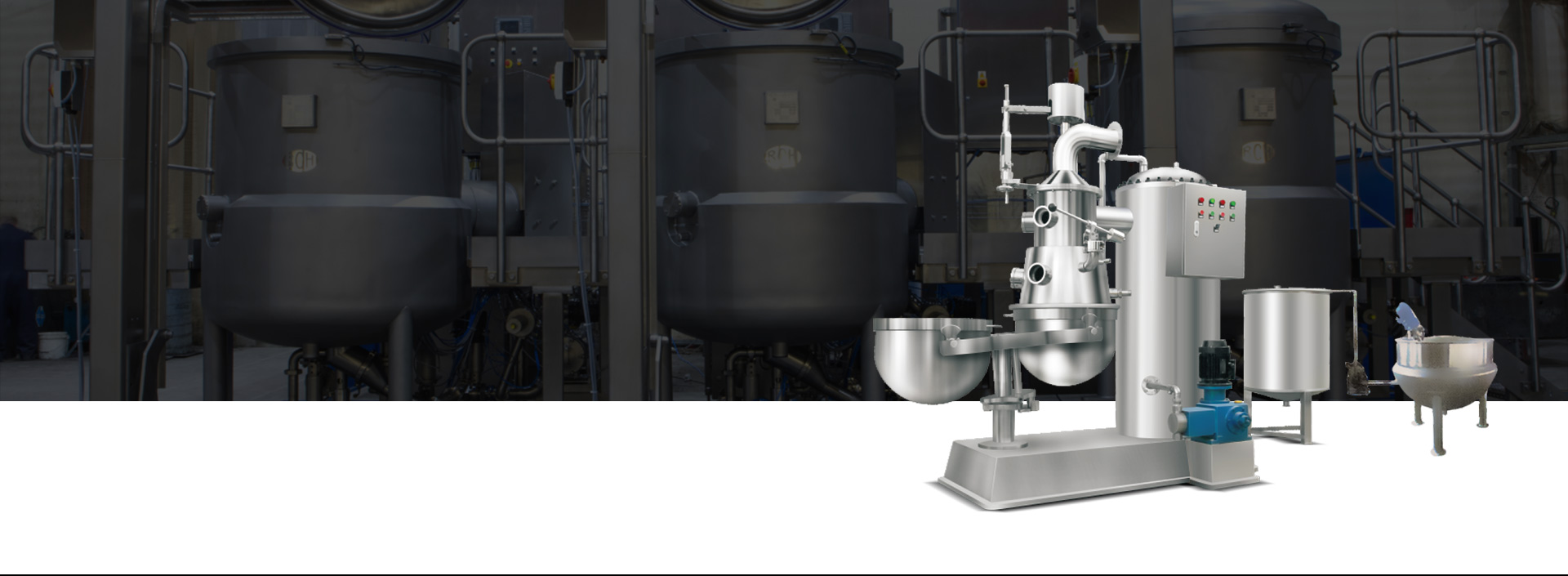
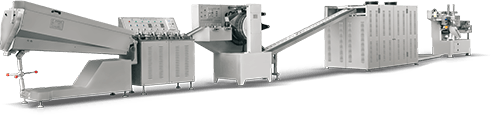
Watch a rainbow lollipop line running at full speed and the physics involved becomes obvious fast—hot sugar syrup, cooked to around 145-150°C and reduced to roughly 2-4% moisture content, has a narrow working window before it either sets too hard to shape or stays too soft to hold a clean spiral pattern. Getting that syrup from a batch cooker into a properly layered, stick-mounted, individually wrapped lollipop, at a rate of dozens or hundreds of pieces per minute, is exactly the coordination problem automatic lollipop lines exist to solve.
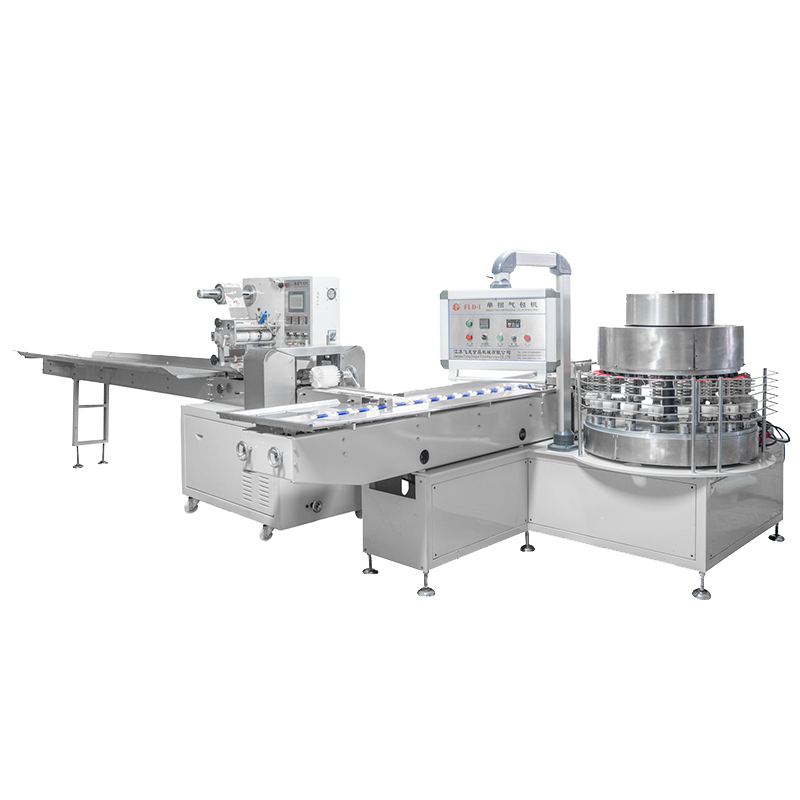
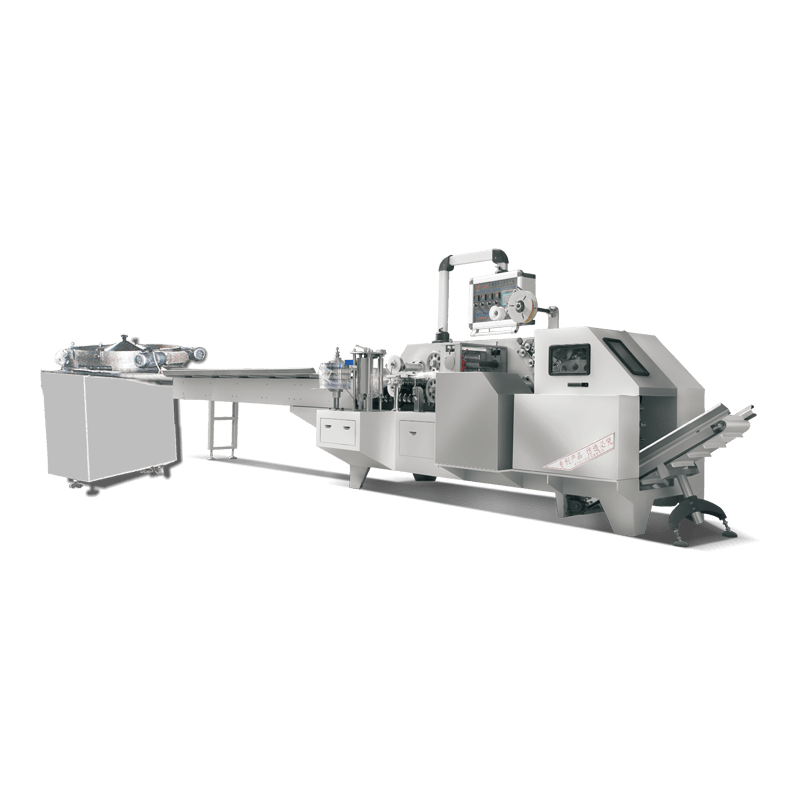
Rainbow lollipops earned their retail appeal precisely because that layered spiral pattern is genuinely hard to fake convincingly by hand at commercial volume—the color bands need consistent width, the spiral needs even rotation, and the finished piece needs to cool and set without the colors bleeding into each other. An automatic rainbow lollipop machine typically chains together candy rope forming, spiral twisting, die-cutting or rotary forming, stick insertion, cooling, and often initial wrapping into one continuous mechanical sequence, replacing what would otherwise be a genuinely difficult manual process to scale consistently.
Whether one specific machine configuration suits a given candy business, though, depends heavily on production volume targets, how many distinct product variants are planned, available floor space, and how much manual flexibility the operation wants to retain. A continuous rotary-die line built for high-volume single-SKU output solves a completely different problem than a smaller batch-forming setup built for a confectioner running frequent small-batch flavor and color changes.
What Types of Candy Production Needs Can an Automatic Rainbow Lollipop Machine Address?
Rainbow lollipop production sounds like one category, but the actual machine requirements diverge considerably depending on output volume, color complexity, and how often the product lineup changes.
A manufacturer running one or two established spiral designs at high volume generally wants a continuous rotary forming line—syrup fed steadily from a continuous cooker, rope-formed and twisted mechanically, cut and stick-inserted on a fixed cycle. A manufacturer running a broader seasonal or gift-market lineup, swapping color combinations and shapes more frequently, generally benefits more from a line with quicker die-change capability and more accessible manual color-streaming stations, even at some cost to raw throughput.
Color preparation method matters directly here too. Rainbow effects typically come from either streaking multiple syrup colors together at the rope-forming stage (creating the characteristic swirl) or layering pre-colored syrup ropes before twisting. The first method needs a forming head and rope-sizing die capable of handling multi-color feed without the colors muddying together; the second needs upstream batching capacity to prepare and hold several separate colored syrup batches at the right temperature simultaneously, ready for combination.
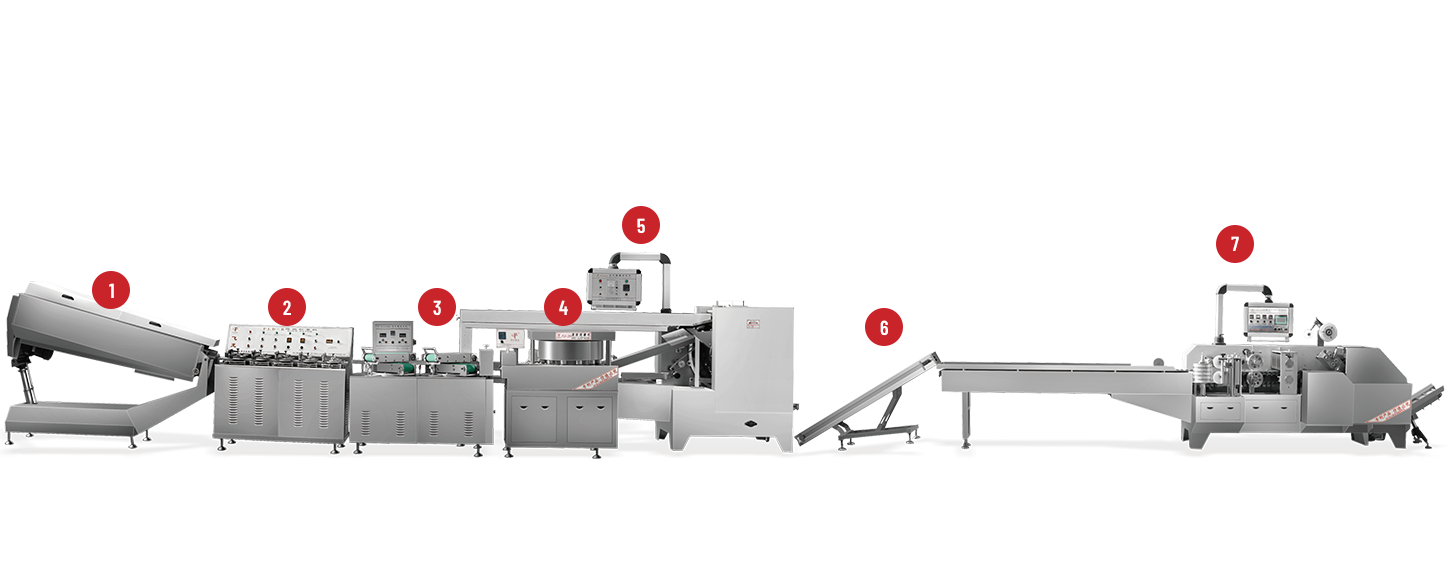
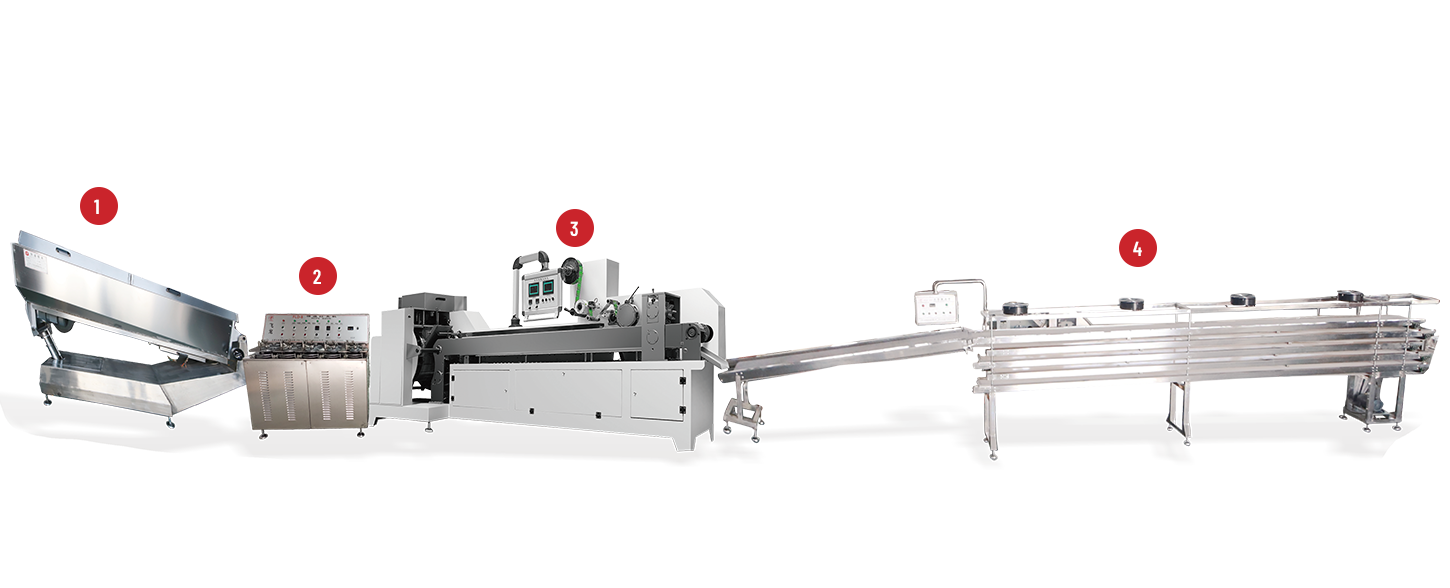
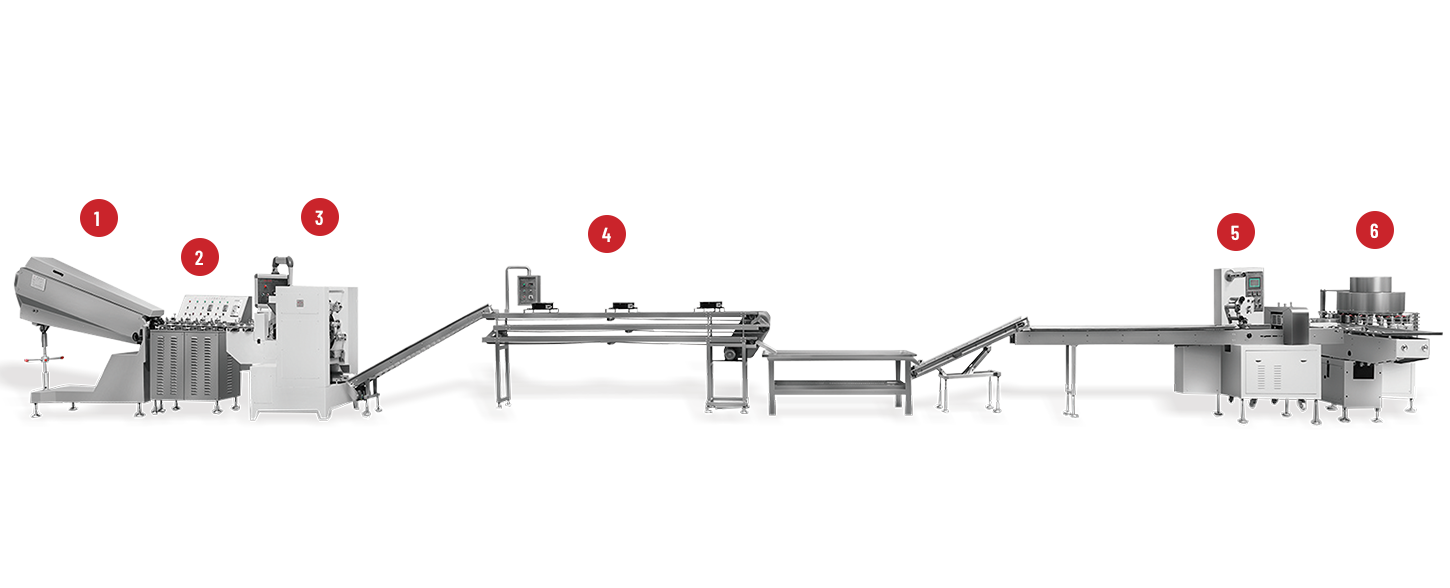
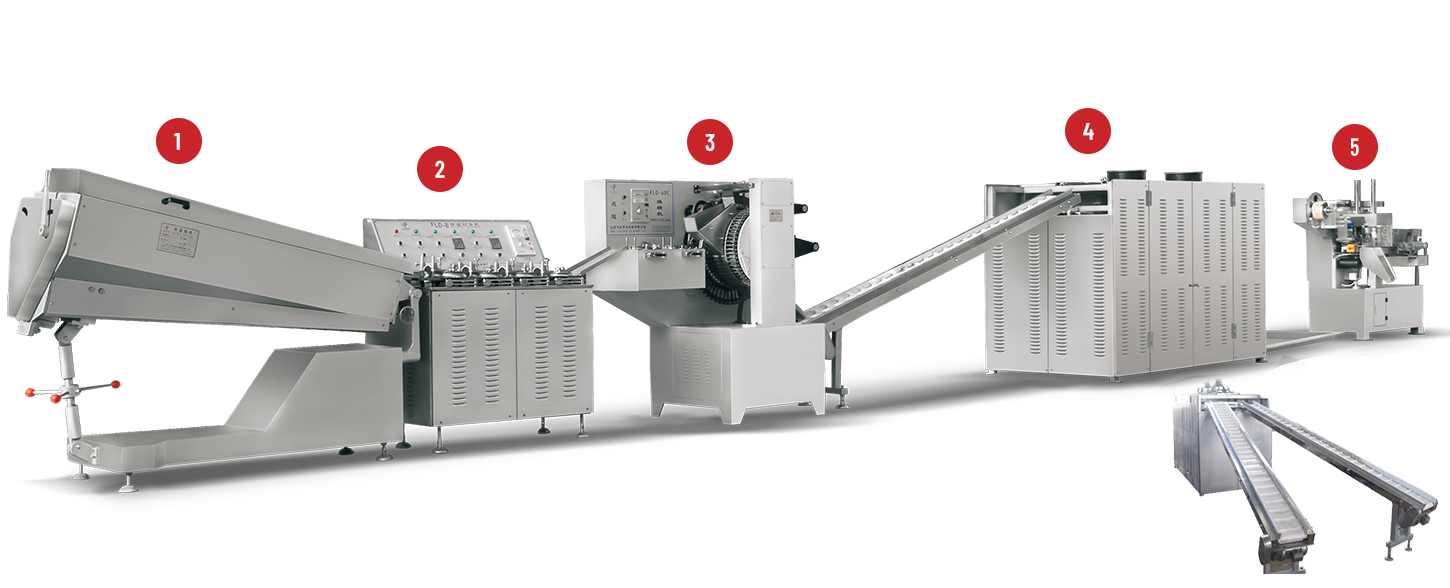
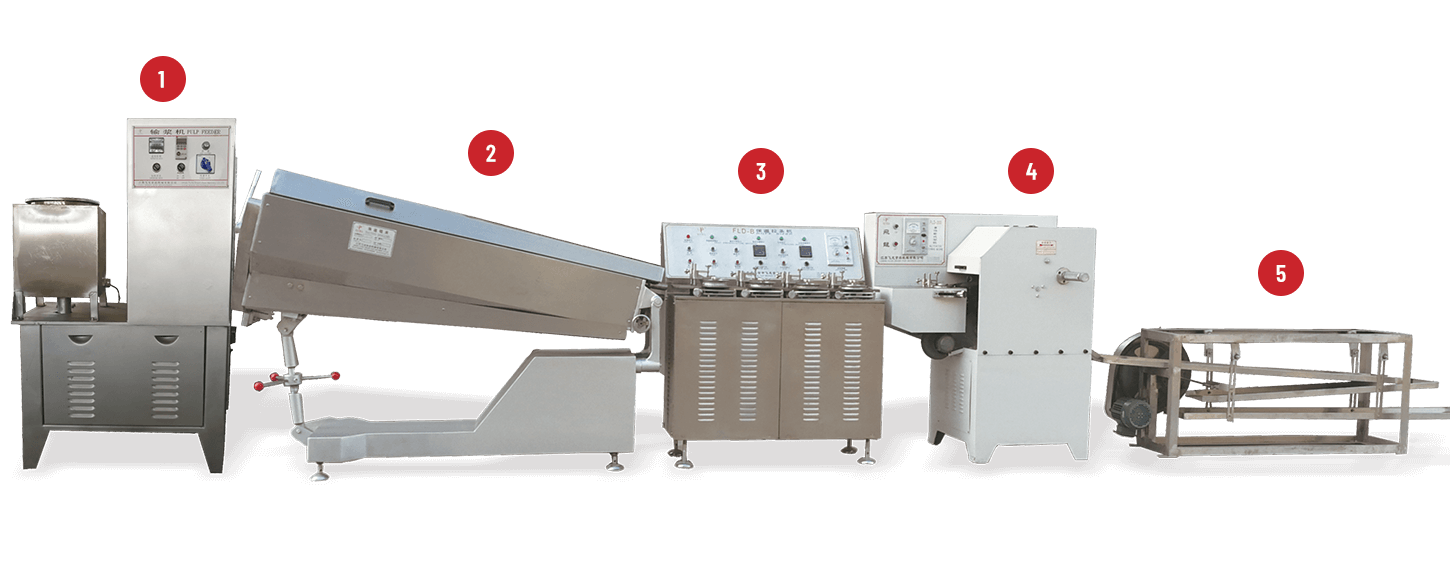
Line integration is the other major variable. Higher-volume operations generally want cooking, forming, cooling tunnel, stick insertion, and wrapping all mechanically linked on one continuous conveyor path, minimizing manual transfer between stages. Smaller or more experimental operations sometimes deliberately keep certain stages—particularly final wrapping or inspection—as separate manual steps, trading some throughput for easier troubleshooting and product changeovers.
None of this means one universal machine configuration covers every case well. It means the actual production requirement—volume, color complexity, changeover frequency—needs mapping out clearly before evaluating specific line configurations against each other.
How Does Automation Help With Rainbow Lollipop Production?
Manual rainbow lollipop production runs into a hard ceiling fairly quickly, mostly because the syrup's working temperature window doesn't wait for a worker to catch up on the next stage.
Hand-forming a rainbow spiral involves pulling and twisting hot syrup ropes, cutting to length, inserting a stick while the candy is still warm enough to bond around it, then transferring to a cooling surface before the piece either slumps out of shape or the color bands blur together from excess handling. Doing this reliably at more than a modest hourly volume, with consistent color pattern and stick placement across every piece, becomes genuinely difficult once output targets rise, since human handling speed and precision naturally vary piece to piece.
Mechanized rope-forming and twisting solves the consistency problem directly—a forming head pulls and shapes the syrup rope at a fixed, repeatable rate, and a twisting mechanism applies uniform spiral rotation that doesn't drift the way manual twisting technique inevitably does across a long shift. A synchronized stick-feeder mechanism then inserts sticks at the precise moment in the cooling curve when the candy is firm enough to hold the stick securely but not yet fully set—timing that's difficult to hit consistently by hand but straightforward for a properly calibrated mechanical feeder running on a fixed cycle.
Cooling tunnel integration extends this consistency further, moving formed pieces through a controlled temperature-drop zone at a fixed conveyor speed rather than relying on ambient room cooling, which varies with room temperature, humidity, and how many pieces happen to be sitting on a cooling tray at once.
None of this eliminates the need for people on the line. Someone still needs to manage syrup batching and color preparation, monitor forming quality visually for streaking or shape defects, handle routine cleaning and die changeovers, and manage packaging logistics. What automation changes is which tasks people spend their time on—shifting away from repetitive, precision-timed manual forming and toward monitoring, quality judgment, and problem-solving, which is generally a better use of skilled labor on a candy production floor.
Can One Machine Support Different Rainbow Lollipop Designs?
Design flexibility on a lollipop line comes down almost entirely to how the forming die and rope-sizing components are engineered, since that's the hardware directly shaping the candy's final profile.
A fixed-die rotary forming head produces one consistent shape and size reliably at high speed, but changing to a meaningfully different silhouette generally means physically swapping the die set—a process that ranges from a fairly quick tooling change on well-designed commercial lines to a more involved changeover on simpler or older equipment. Manufacturers running one or two core shapes benefit from optimizing around a fixed die setup, since changeover frequency stays low and throughput stays maximized.
Spiral pattern variation is a separate flexibility question from shape. The number of colors streamed into the rope, the rope's diameter going into the twisting stage, and the twist ratio (rotations per unit length) all influence how the finished spiral pattern looks—tighter twists produce narrower, more frequent color bands; looser twists produce broader, bolder bands. Adjusting these parameters generally requires less mechanical changeover than swapping the forming die itself, since they're often controlled through feed rate and rotation speed settings rather than physical tooling swaps.
This distinction matters directly for production planning. A business wanting genuine shape variety—round pops, flat disc pops, novelty silhouettes—needs to budget for die-change downtime and possibly multiple die sets as a capital cost. A business wanting color and pattern variety within one consistent shape can often achieve that through settings adjustment alone, without the same tooling investment or changeover time penalty.
Reasonable flexibility, matched to what the product line actually needs, tends to serve a business far better than maximum theoretical flexibility that mostly sits unused. A line engineered to handle six different shapes but only ever running two in practice has paid for complexity it isn't using, at the cost of simpler operation and maintenance on a line built for exactly the range actually needed.
Is an Automatic Rainbow Lollipop Machine Suitable for Different Production Scales?
Line scale needs matching honestly against actual production volume and business trajectory, since overbuying automation capacity creates its own set of problems just as much as underbuying it does.
A smaller confectioner producing a few thousand units weekly, often across a rotating range of flavors and seasonal designs, generally does better with a semi-automatic setup—mechanized forming and cooling, but retaining manual stick insertion or manual color-streaming, which keeps the capital cost down and preserves the flexibility to change products frequently without extensive die or setting changeovers. Running a fully continuous high-volume line at low utilization wastes capacity and adds maintenance and cleaning overhead disproportionate to actual output.
A larger operation running continuous single- or dual-SKU production at high volume—tens of thousands of units daily—generally justifies a fully integrated continuous line, where the throughput gain and consistency benefit clearly outweigh the reduced flexibility and higher upfront equipment cost. At this volume, even small per-unit efficiency gains from full automation compound into meaningful cost savings.
The genuine risk worth flagging is choosing equipment based on automation level as a goal in itself, rather than as a means to a specific, calculated production target. A fully automated line sitting idle for large portions of a shift because actual order volume doesn't support its throughput capacity isn't delivering value proportional to its cost—a simpler, better-matched line running closer to its designed capacity most of the time typically serves the business better financially, even though it looks less impressive on a spec sheet.
Existing workflow integration deserves equal consideration alongside raw capacity. If a manufacturer's current syrup batching, quality inspection, and packaging processes are already organized around a particular rhythm, new forming equipment needs to synchronize with that rhythm rather than forcing a wholesale reorganization of unrelated production stages that were working fine already.
How Can an Automatic Rainbow Lollipop Machine Support Product Variety?
Product variety in this category usually plays out across three fairly distinct levers—shape, color pattern, and packaging presentation—and each one interacts differently with the actual forming equipment.
Shape variety, as covered earlier, ties directly to die tooling and generally represents the highest-cost, lowest-frequency type of change a production line accommodates. Color and pattern variety is considerably more flexible in well-designed lines, since it's largely a function of syrup batch preparation and forming-stage settings rather than physical tooling—a softer pastel color story (useful for baby shower or spring seasonal lines) and a bolder saturated rainbow (useful for a standard year-round product) can often run on the identical die and forming head, just with different upstream syrup batches feeding in.
Packaging presentation is the third lever, and it's largely independent of the forming stage entirely. The same physical lollipop, at the same shape and color pattern, can go out in a simple twist-wrap for bulk retail, an individual printed wrapper for a branded gift line, or a bagged multi-pack for a different sales channel—a distinction that mostly affects the downstream wrapping and packaging equipment rather than the forming line itself.
| Production consideration | Why it matters |
|---|---|
| Candy shape | Tied to die tooling; highest changeover cost, lowest change frequency in most operations |
| Color and pattern | Controlled largely through syrup batching and forming settings; comparatively low-cost flexibility |
| Rope diameter and twist ratio | Determines spiral band width and visual density of the finished pattern |
| Stick insertion timing | Needs calibrating to the candy's actual cooling curve, not a fixed generic setting |
| Packaging format | Largely independent of forming stage; tied to downstream wrapping and packing equipment |
| Overall line sequencing | Determines how quickly a new color or pattern idea moves from concept to finished, packaged product |
This breakdown is genuinely useful for production planning, since it clarifies that "adding product variety" doesn't automatically mean an expensive tooling investment—depending on which specific lever a business wants to pull, the actual cost and complexity involved can differ enormously.
What Role Does Production Consistency Play?
Visual pattern is the entire commercial premise of a rainbow lollipop—buyers notice it specifically because of the spiral, and a batch where that spiral comes out muddy, uneven, or off-center undermines the product's core appeal regardless of how it tastes.
Mechanized rope forming and twisting delivers consistency mainly by removing hand-to-hand variation—every rope gets pulled to the same diameter, every twist gets applied at the same rotation rate, every piece moves through the identical cooling tunnel profile. This is where automated forming genuinely outperforms manual production on a metric that matters directly to the product's shelf appeal, not just on raw output speed.
Consistency requirements extend past the visible pattern into functional details that matter just as much commercially. Stick placement needs to be centered and secure enough to survive shipping and handling without the stick working loose or the candy cracking around the insertion point. Piece weight needs staying within a tight tolerance both for consistent portion presentation and for accurate packaging line calibration downstream. Moisture content at the point of packaging needs controlling carefully, since a piece that's slightly under-dried can turn sticky in the wrapper, while over-drying can create excess brittleness and breakage during handling.
None of this removes the need for direct human inspection, even on a fully automated line. Syrup batches vary slightly with raw material lot changes. Ambient humidity shifts affect drying and setting time. Tooling wears gradually and needs periodic inspection and replacement. Trained operators watching the line for early signs of streaking defects, stick misalignment, or shape drift catch problems well before they'd show up as a costly rejected batch at final quality control.
A well-run rainbow lollipop operation therefore pairs mechanical consistency at the forming and cooling stages with active human oversight watching for the kinds of drift that automation alone won't self-correct—which is really the practical, sustainable balance successful confectionery lines settle into rather than trying to remove human judgment from the process entirely.
How Should Manufacturers Match the Machine With Their Production Process?
Specification should start from a clearly defined production target, not from browsing available equipment and working backward.
1. What specific lollipop product is being planned?
Pin down shape, target size, color pattern complexity, and expected stick specification before evaluating forming equipment, since these directly determine die and forming-head requirements.
2. What's the realistic product variety over the next one to two years?
A business planning genuine shape diversity needs to budget for die tooling investment and changeover time from the outset, not discover the need after committing to a single-die line.
3. What does current manual production actually cost in labor hours per unit?
Quantifying existing manual bottlenecks—specifically where forming, twisting, or stick insertion consume disproportionate labor time—clarifies where automation investment would generate the clearest return.
4. How will finished pieces move into wrapping and packaging?
Confirming compatibility between the forming line's output rate and downstream wrapping equipment's intake rate avoids creating a new bottleneck by solving the forming stage alone.
5. What's the actual available floor space and utility capacity?
Continuous lines with integrated cooling tunnels need meaningfully more floor length than a compact semi-automatic setup, and cooking stages need adequate steam or electrical capacity confirmed before equipment arrives.
6. How frequently will color or pattern changes realistically happen?
Frequent changeovers favor equipment with faster cleaning and syrup-changeover characteristics, even if that means accepting a somewhat lower peak throughput rating.
7. Who will run and maintain this equipment day to day?
Confirming operator familiarity with the specific forming and cooling technology, or budgeting for adequate training, avoids a scenario where sophisticated equipment underperforms simply because staff aren't yet comfortable running it at full capability.
Working through this sequence turns equipment selection into a calculation grounded in the business's actual production reality, rather than a comparison of competing spec sheets in isolation.
Can an Automatic Rainbow Lollipop Machine Support Future Product Changes?
Candy markets shift with seasons, trends, and retail channel demands, and a production line's ability to accommodate reasonable future change is worth weighing seriously at the specification stage rather than treated as a problem to solve later.
Building in this kind of flexibility doesn't mean specifying a line capable of literally any conceivable future product—that kind of open-ended flexibility usually comes at a real cost in complexity and price that most businesses never fully use. It means understanding which specific types of change are genuinely likely for a given product strategy, and specifying equipment that handles those particular changes reasonably well.
A confectioner with a clear seasonal calendar—say, pastel color runs for spring, bolder saturated colors for a Halloween or year-round core line—benefits from a forming line with quick color-batch changeover capability, since that's the type of variation their actual roadmap calls for regularly. A business planning to eventually expand into genuinely different shape categories, rather than just color variation, needs to budget die tooling investment into that roadmap from the start, understanding it as a planned capital cost rather than an unplanned line limitation discovered later.
Line integration continues to matter here too. A well-connected production sequence—cooking, forming, cooling, stick insertion, and initial packaging all mechanically linked—generally makes introducing a validated new color or pattern faster to bring to full production, since it doesn't require redesigning unrelated upstream or downstream stages just to accommodate the change.
Approaching equipment selection as one piece of a broader production strategy, rather than as an isolated purchase decision, is what lets a rainbow lollipop line actually support a business's product roadmap rather than constraining it. The equipment's real job extends beyond simply shaping candy—it becomes part of how a business organizes materials, labor, product range, and packaging together as a coherent, workable system.
An automatic rainbow lollipop machine genuinely fits different candy production needs precisely when its forming flexibility, throughput capacity, and changeover characteristics are matched deliberately against a manufacturer's actual product plan and production scale. Getting that match right starts with a clear picture of the candy and the business—not with a machine's spec sheet in isolation.
 +86-(0)515-8465666
 +86-(0)515-85566996
 +86-138 1559 9708
 flyloong@flyloongcn.com
 Home
Home