

 ENG
 English
 中文简体
 русский
 Français
 Español
 عربى
Why Packaging Matters for Flat Lollipops
Flat lollipops leave the forming line as individual pieces with sticks, yet they still need a barrier before they move through packing cases, warehouses and retail displays. Individual wrapping keeps one piece from sticking to another, limits contact with hands during distribution and gives each unit a clean surface for sale. Without separation, flat faces can block together, printed designs can scuff and hygiene standards for ready-to-eat sweets become harder to maintain.
Packaging also carries part of the product's identity. Film clarity, twist style and label space influence how the lollipop looks on a hook or in a jar. Flat shapes place special demands on the wrap: the film must cover a wide face without excessive wrinkles, clear the stick and close securely at the ends. Material thickness, width and fold pattern are therefore chosen with the outline and thickness of the candy in mind, not only with generic candy-wrapping practice.
Why Twist Packaging Suits Flat Lollipops
Individual Product Wrapping
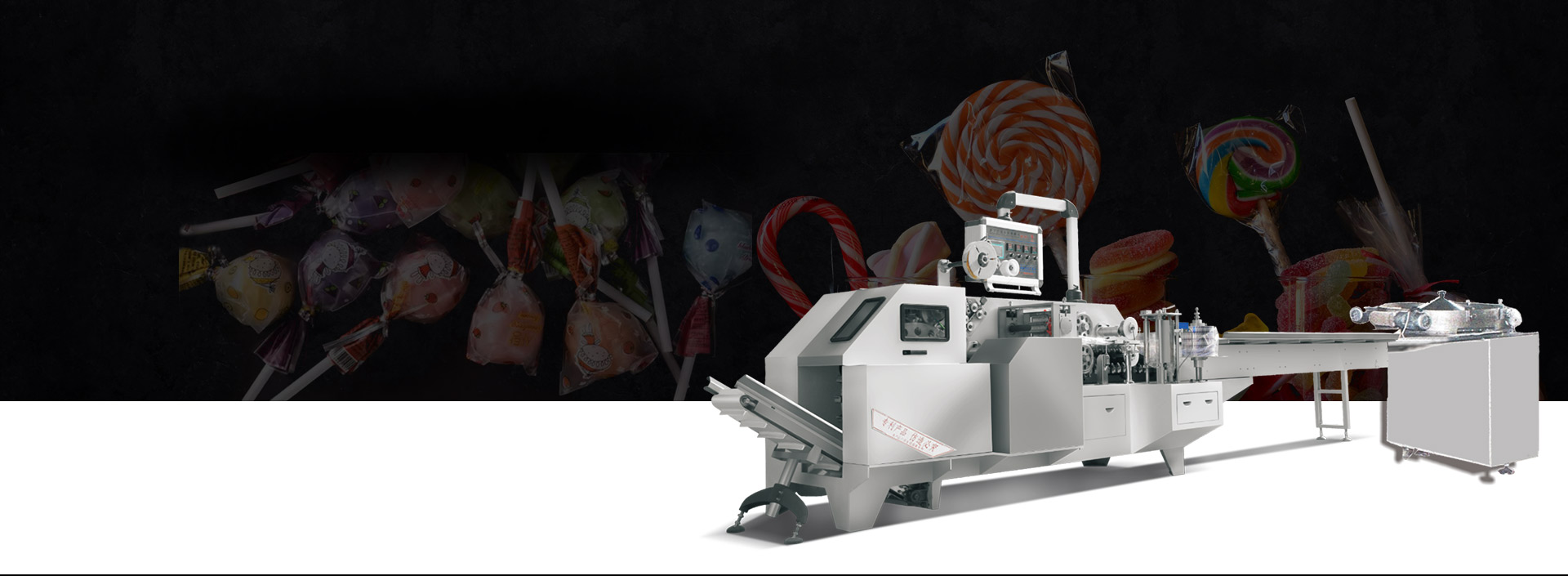
Twist packing treats each lollipop as a single unit. One piece enters the wrap cycle; one sealed unit leaves. That one-to-one pattern matches how flat lollipops are sold and consumed and avoids bulk bags where pieces rub against each other.
Twisted Ends That Close the Wrap
After the film is drawn around the candy, the ends are twisted so that the pack closes around the stick region. The twists hold the film in place without requiring heat-sealed seams on every edge, which suits many traditional and promotional lollipop presentations. Closure quality depends on film type, twist tightness and correct positioning of the stick within the wrap.
A Familiar Retail Appearance
Twisted ends are widely recognised on stick candy. Shoppers identify the format quickly, and the flat face can remain visible through clear film so that custom printing or colour on the candy still shows. Presentation and protection work together rather than competing.
Easier Handling, Display and Distribution
Wrapped pieces can be counted, boxed and hung without direct touch of the candy surface. Displays stay tidier because units do not weld together in warm conditions as easily as naked flat sweets. For factories, individual packs simplify quality sampling and reduce rework caused by stuck clusters.
Adaptability to Size and Film
Wrapping setups are adjusted to the actual diameter or outline of the flat piece, stick length and chosen film. Changeovers between similar flat designs remain practical when the machine's adjustment range covers the product family. A line that only fits one narrow size forces extra manual packing for every variant outside that band.
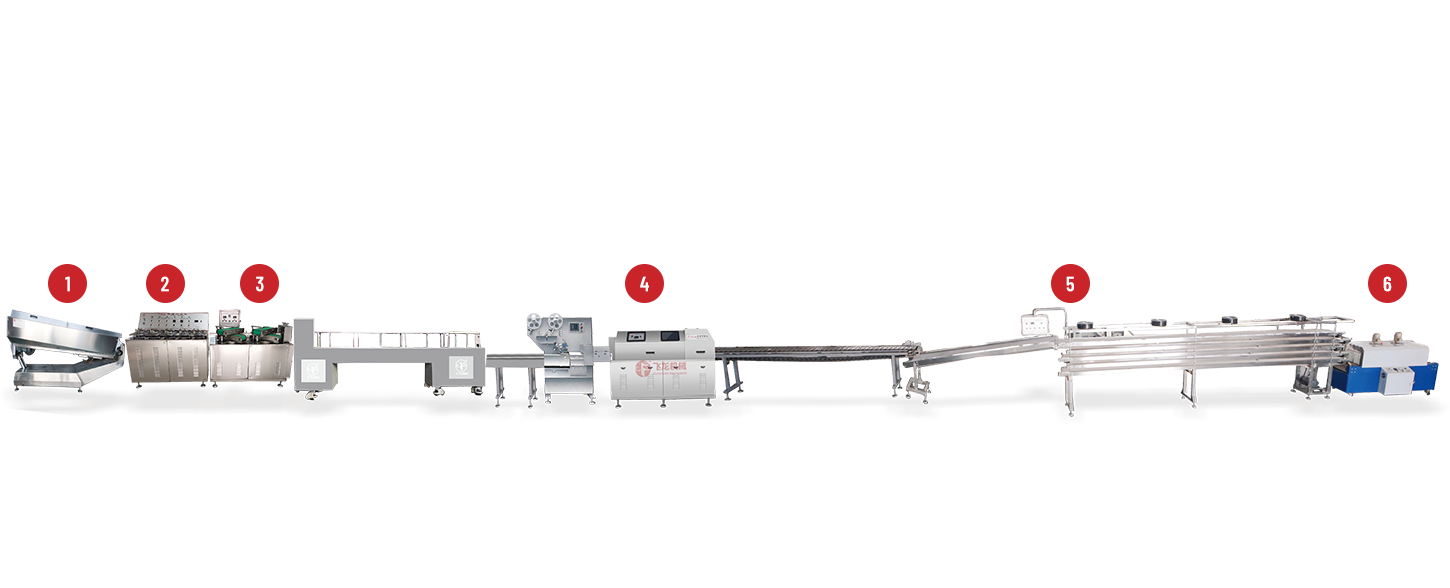
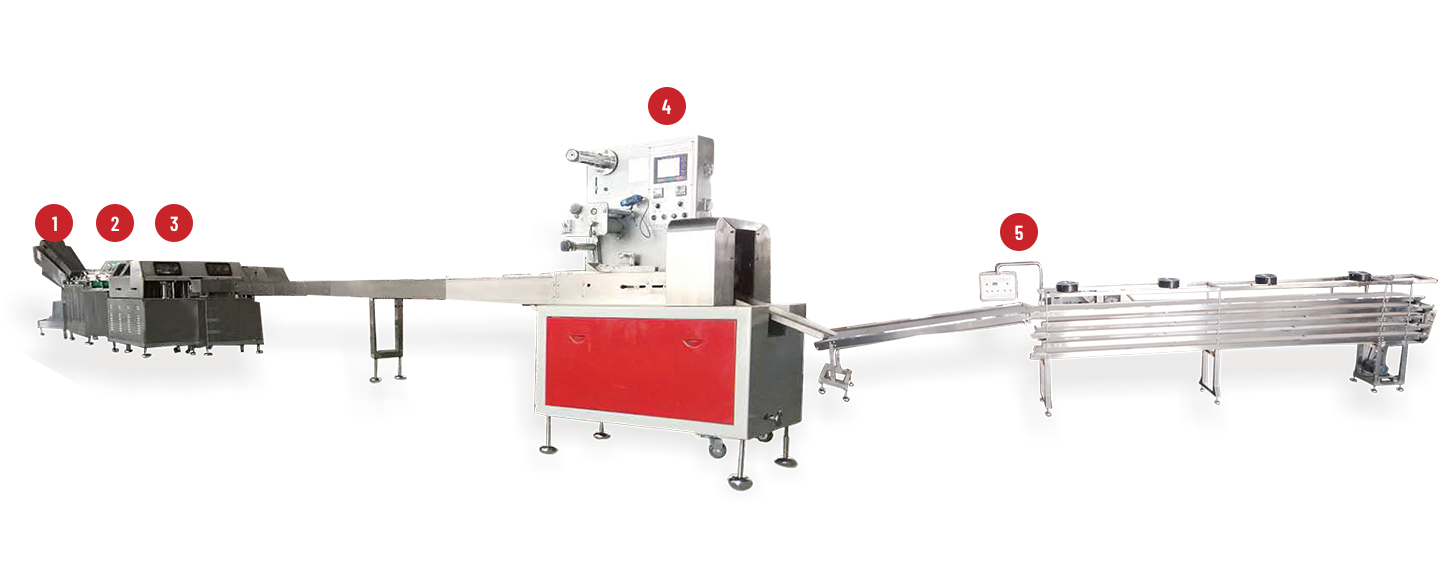
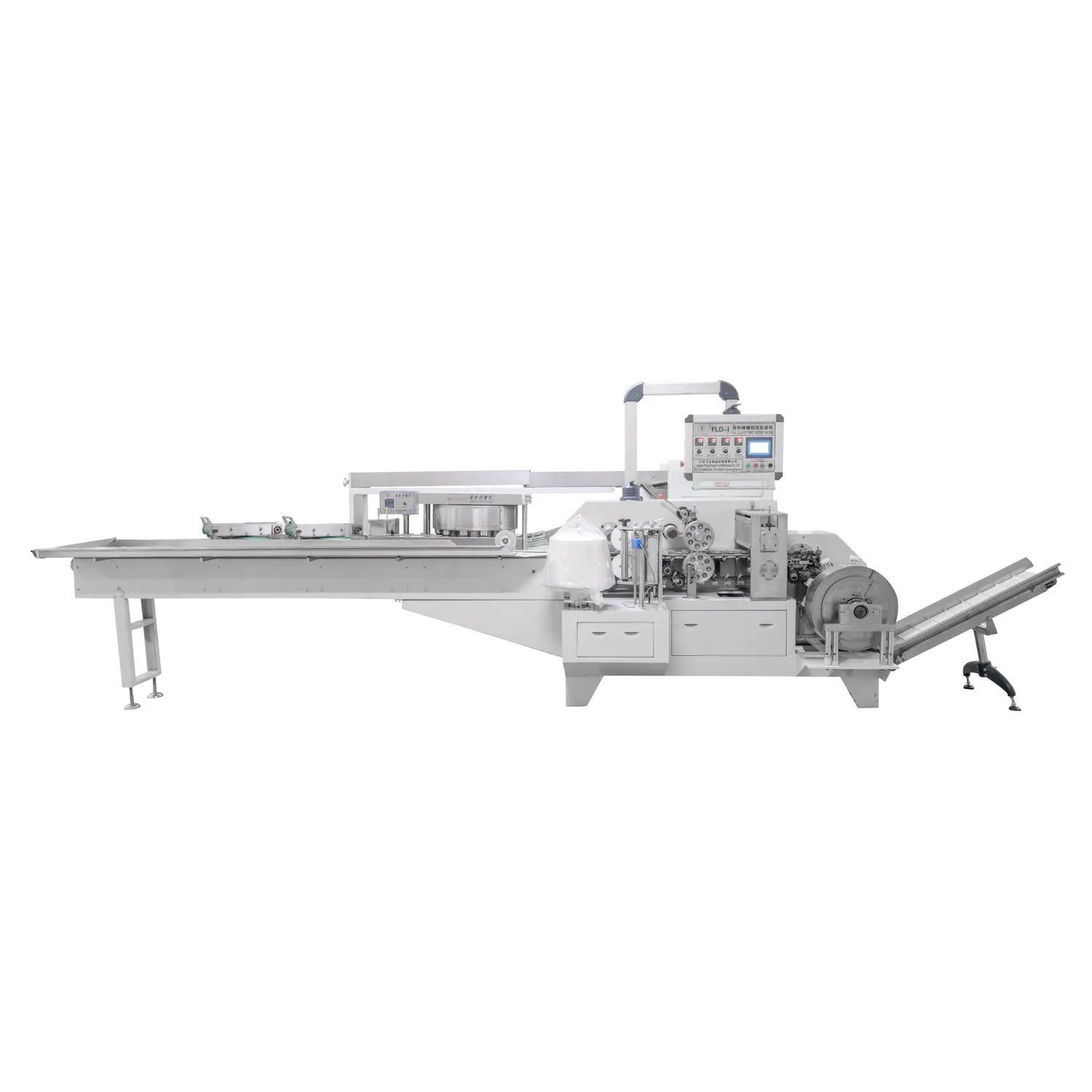
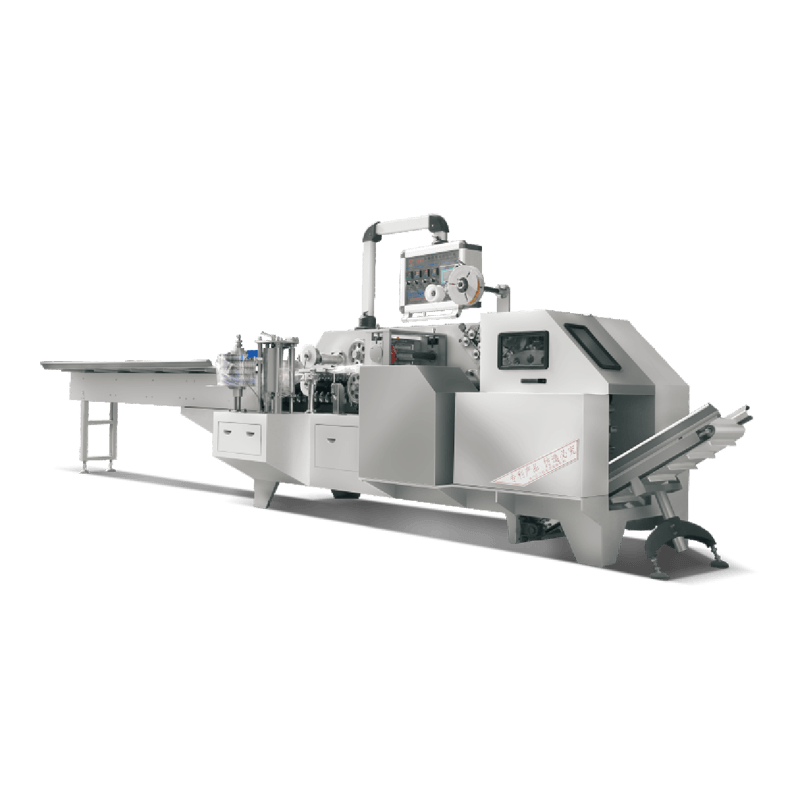
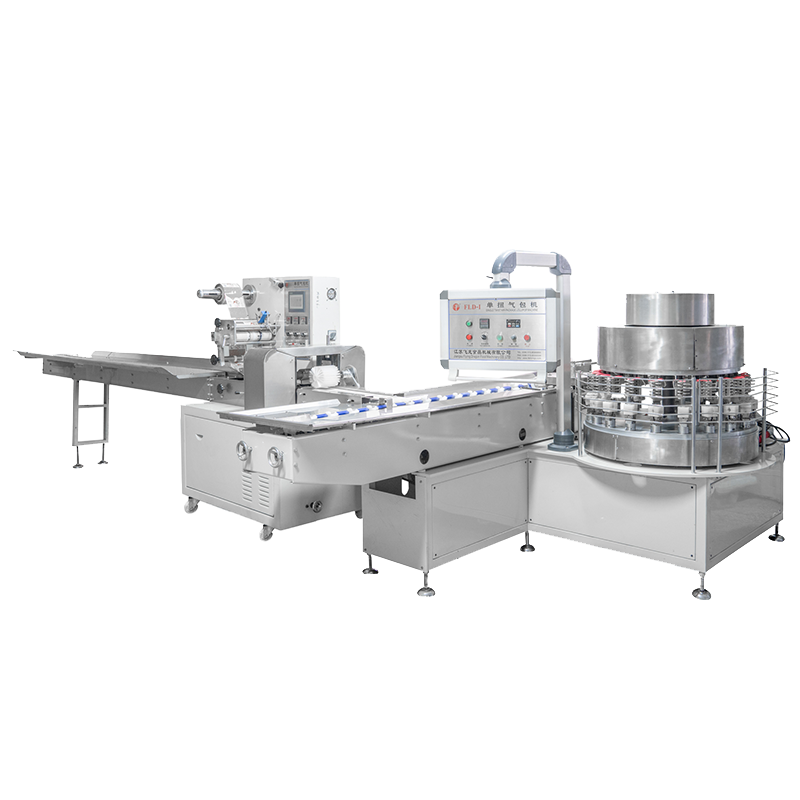
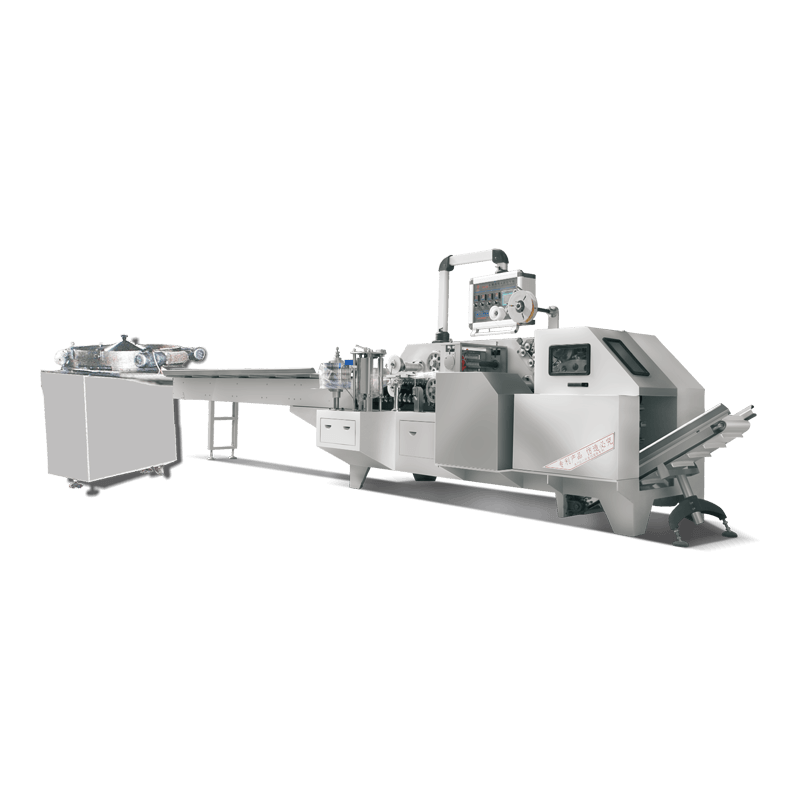
How a Flat Lollipop Twist Packing Machine Works
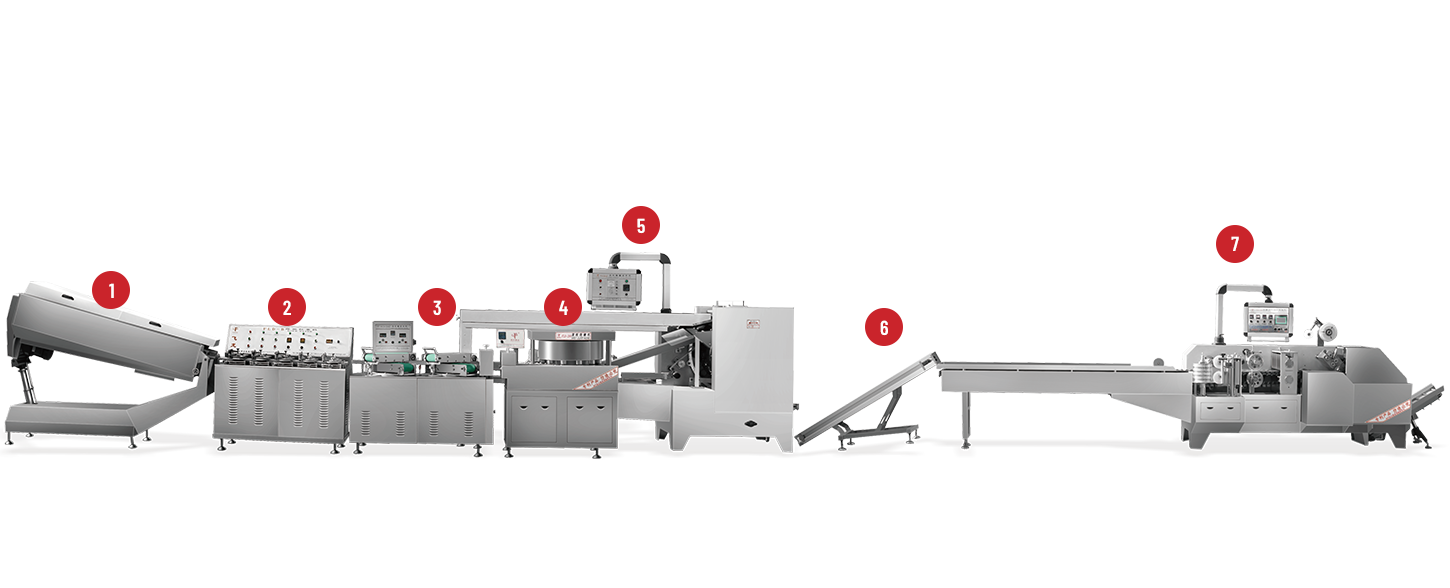
Feeding Finished Pieces into the Packing Process
Formed and cooled lollipops are fed in single file or in a controlled pattern so that the machine receives one piece at a time. Upstream timing from the candy line affects how evenly that feed runs. Gaps or doubles at the infeed show up later as misses or jams.
Positioning Each Lollipop for Wrapping
Guides or holders orient the piece so that the flat faces and stick sit where the film will cover them correctly. Poor orientation produces skewed wraps, exposed candy edges or twists that do not sit on the stick.
Supplying and Forming the Packaging Material
Film is drawn from the reel and formed around the product according to the folding pattern designed for twist closure. Tension and alignment must stay stable; otherwise the wrap loosens or the print on printed film drifts off-centre.
Twisting the Ends to Complete the Pack
Mechanisms grip and twist the film ends to close the package. Consistency of twist angle and tightness across a run keeps packs looking uniform and reduces the share of packs that open in transit.
Discharging Wrapped Lollipops
Finished units leave toward collection tables, conveyors or secondary packing. Smooth discharge prevents newly twisted packs from being crushed while the film still settles. Lollipop Making Machine lines that end in forming only still need this packing stage—or an equivalent manual wrap—before product is ready for shipment.
Advantages of a Dedicated Flat Lollipop Twist Packer
Application Focused on Flat Lollipops
A machine laid out for flat stick candy accounts for wide faces and stick geometry rather than forcing a generic pillow-pack path to cope with an unsuitable shape. Tooling and guides reflect that product family.
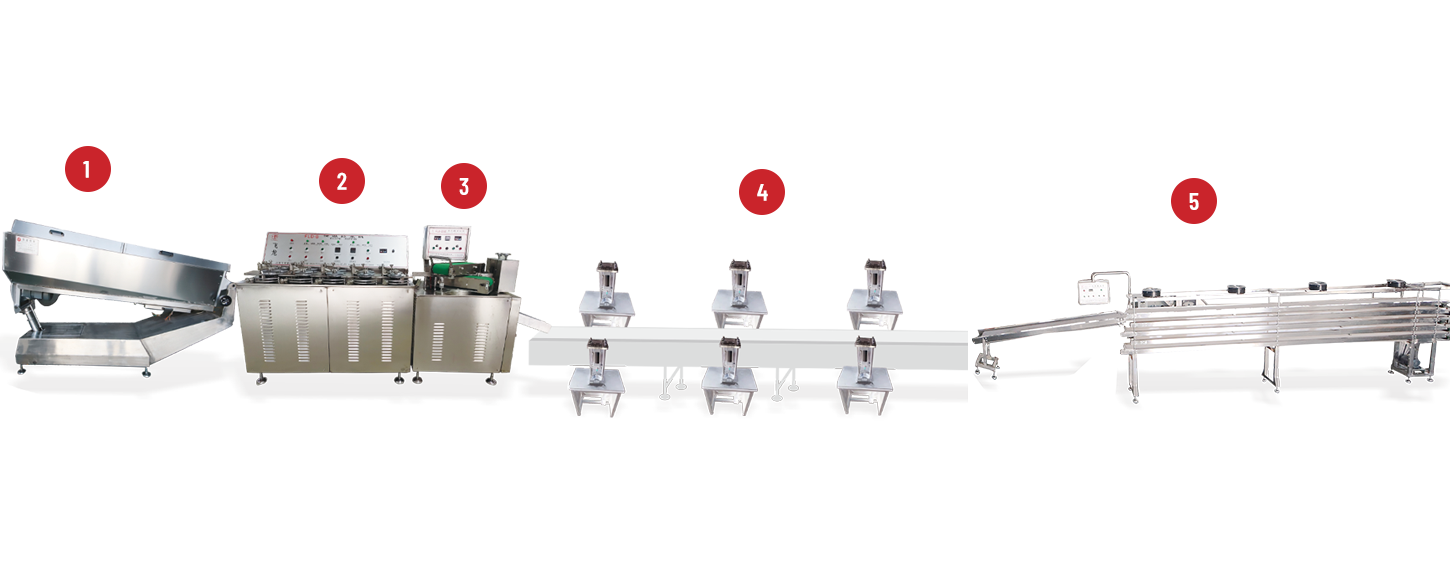
Less Repetitive Manual Wrapping
Mechanical wrapping replaces hand folding and twisting for ordinary individual packs. Operators concentrate on film loading, inspection and clearing minor stops instead of wrapping every piece by hand.
Repeatable Packaging Motions
Once settings match the product and film, the same sequence repeats for the length of the run. Uniform appearance across cartons is easier to maintain than with purely manual wrapping, provided film quality and product dimensions stay within the set range.
True Individual Packing
Each cycle handles a separate lollipop. There is no reliance on operators to separate a bulk pile and wrap under time pressure, which is where misses and hygiene issues often appear.
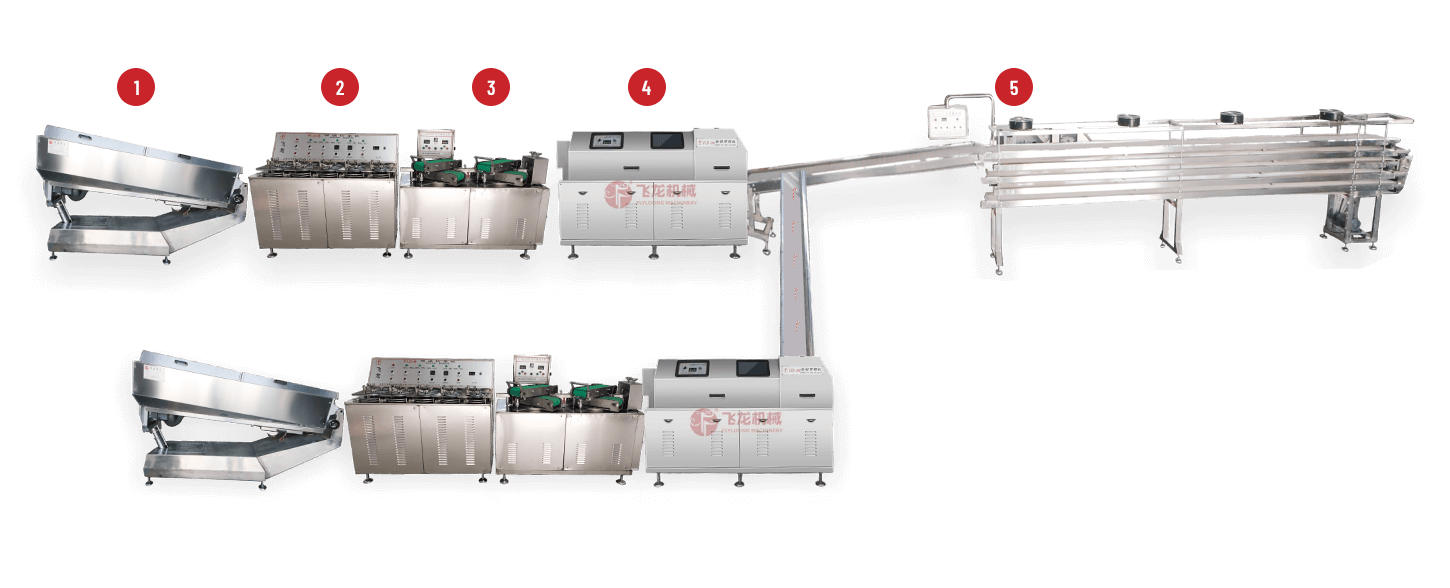
Coordination with the Wider Production Flow
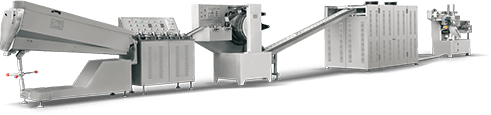
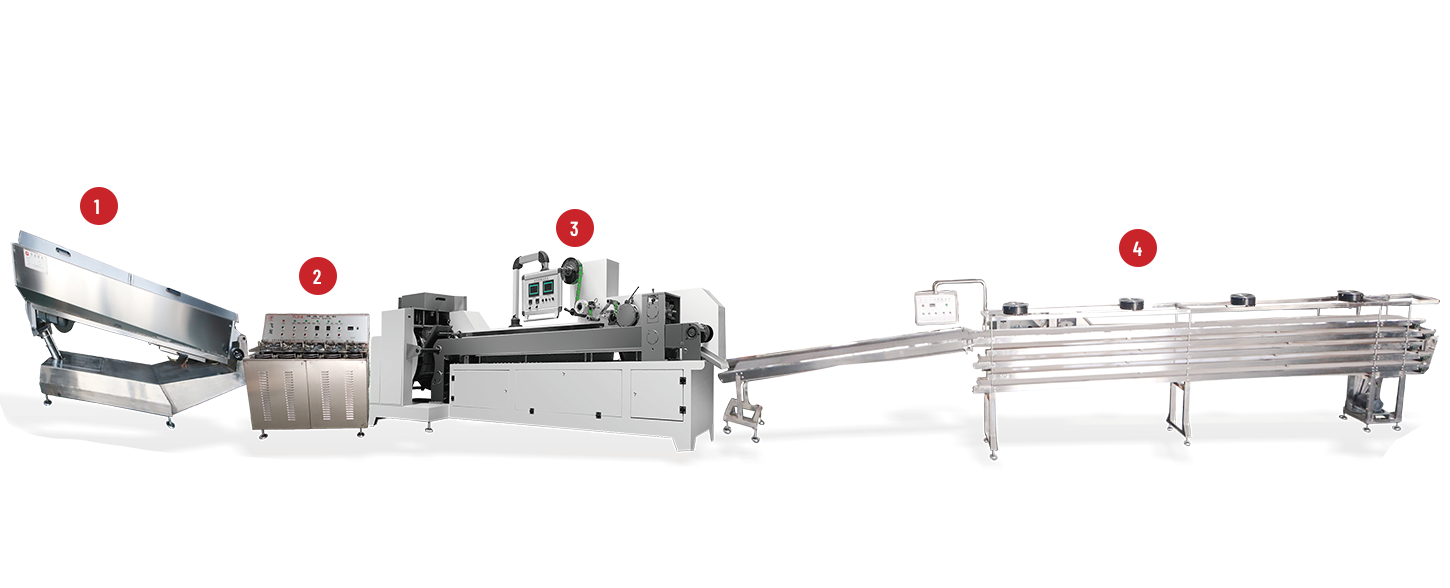
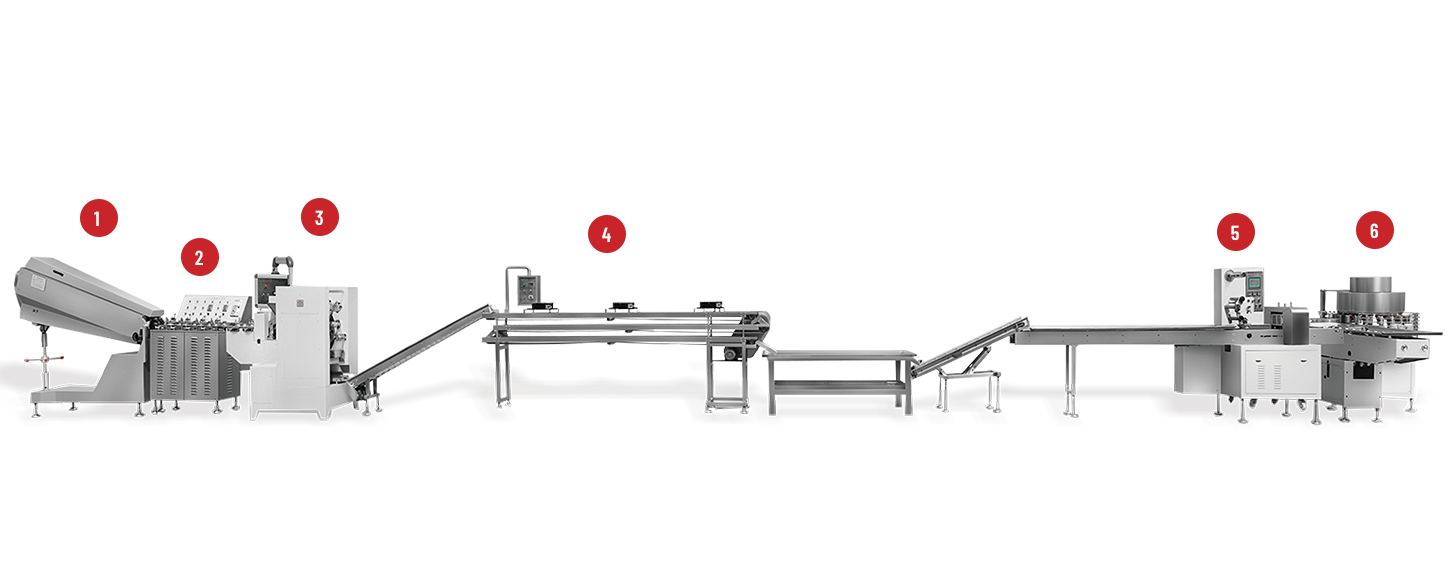
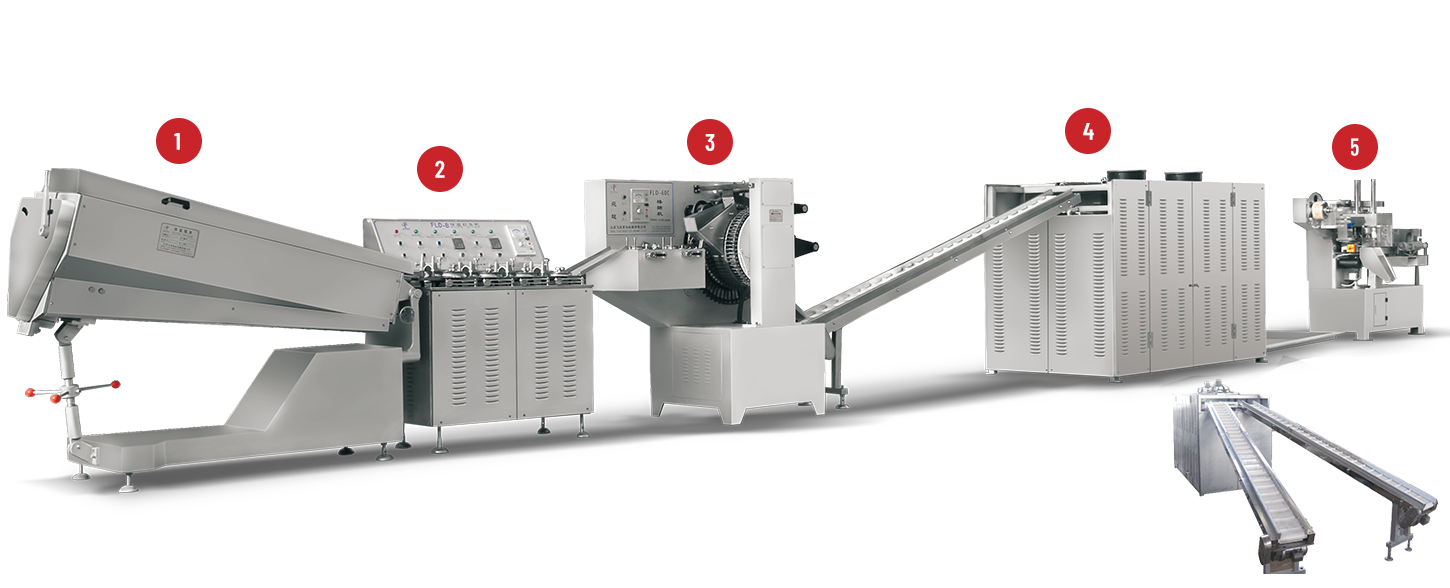
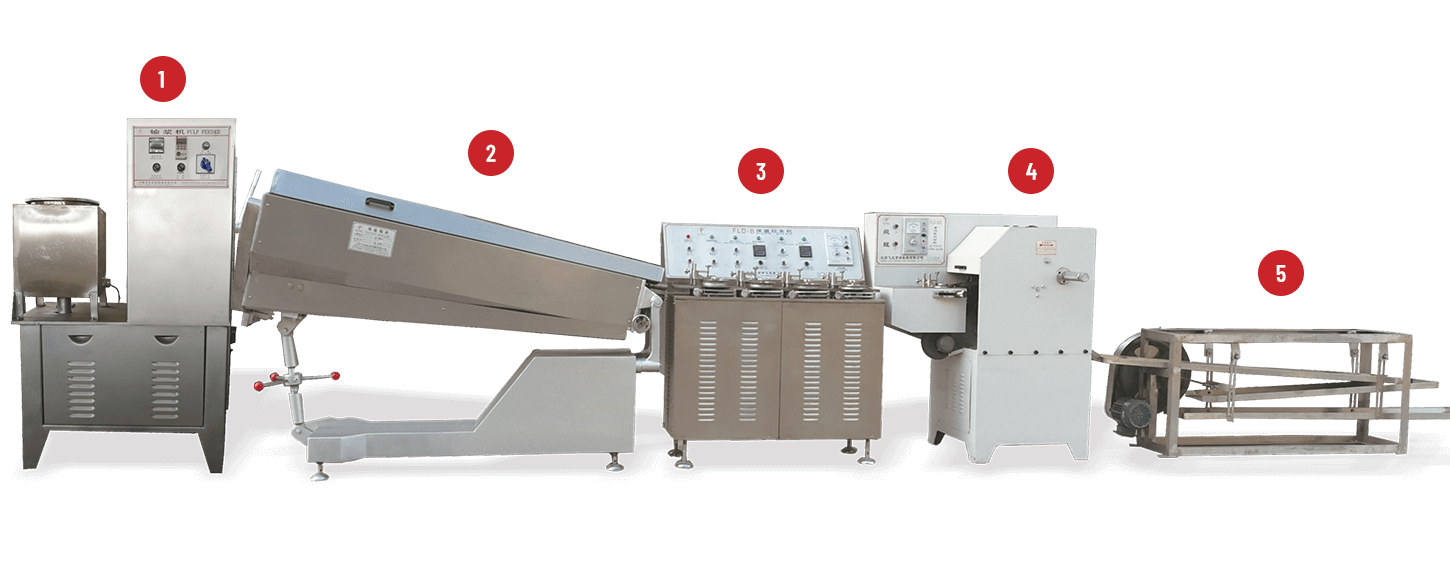
When forming output and packing rate are aligned, work-in-progress buffers stay small and candy does not sit soft and warm in open trays for long. Integration is a planning task as much as a mechanical one. Industrial Candy Making Equipment for flat lollipops is frequently specified as a linked set of forming and packing stages for that reason.
How Twist Packing Supports Flat Lollipop Manufacturing
Twist packing sits at the point where candy becomes a sellable unit. It organises the packaging stage into a measurable process with film consumption, reject rates and throughput instead of an informal bench operation. Batch after batch can present the same twist style and face visibility, which matters for branded and promotional flats. Manufacturers also gain a clearer link between kettle or former output and packed cases, so planning can balance cooking, forming and wrapping without chronic bottlenecks at the end of the line.
Twist Packing Process and Control Points
| Stage | Purpose | Main control points |
|---|---|---|
| Infeed of flat lollipops | Deliver single pieces in order | Spacing, orientation, rate match to former |
| Positioning | Align face and stick for the wrap | Guides, stick direction |
| Film supply and forming | Enclose the candy in packaging material | Tension, alignment, film suitability |
| End twisting | Close the individual pack | Twist tightness, consistency |
| Discharge | Move packs to secondary handling | Avoid crushing; steady flow |
| Line coordination | Balance candy output with packing | Shared planning of rates and buffers |
Film, Hygiene and Changeover Notes
Film must be food-appropriate and suited to twisting without splitting. Storage of reels away from dust and moisture protects run quality. Allergen or colour changeovers need cleaning rules for product-contact parts so that one flat design does not contaminate the next. Trial wraps at the start of a variant confirm that twists hold and that the face sits as intended before full speed is restored.
Individual Twist Wraps for Flat Stick Candy
Twist packaging is used for flat lollipops because it wraps each piece separately, closes the film at the ends in a familiar way and supports handling, display and distribution without unprotected contact between candies. Automated twist packing reduces repetitive hand work and helps keep presentation consistent when forming and packing rates are coordinated. Jiangsu Flying Dragon Food Machinery Co., Ltd. supplies candy production and packing equipment for lollipop and related confectionery lines. Review of product dimensions, film type and required packing rate against the forming line supports selection of twist packing arrangements suited to flat lollipop manufacturing.
 +86-(0)515-8465666
 +86-(0)515-85566996
 +86-138 1559 9708
 flyloong@flyloongcn.com

 Home
