

 ENG
ENG
 English
 中文简体
中文简体 русский
 Français
 Español
 عربى
عربى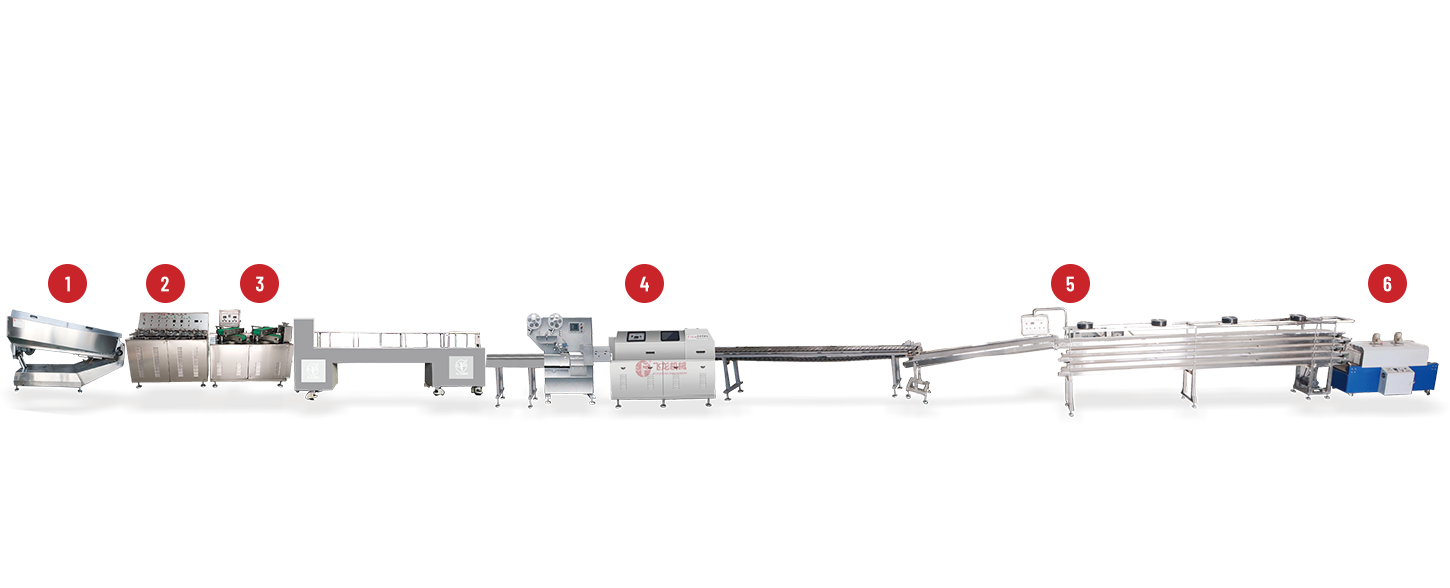
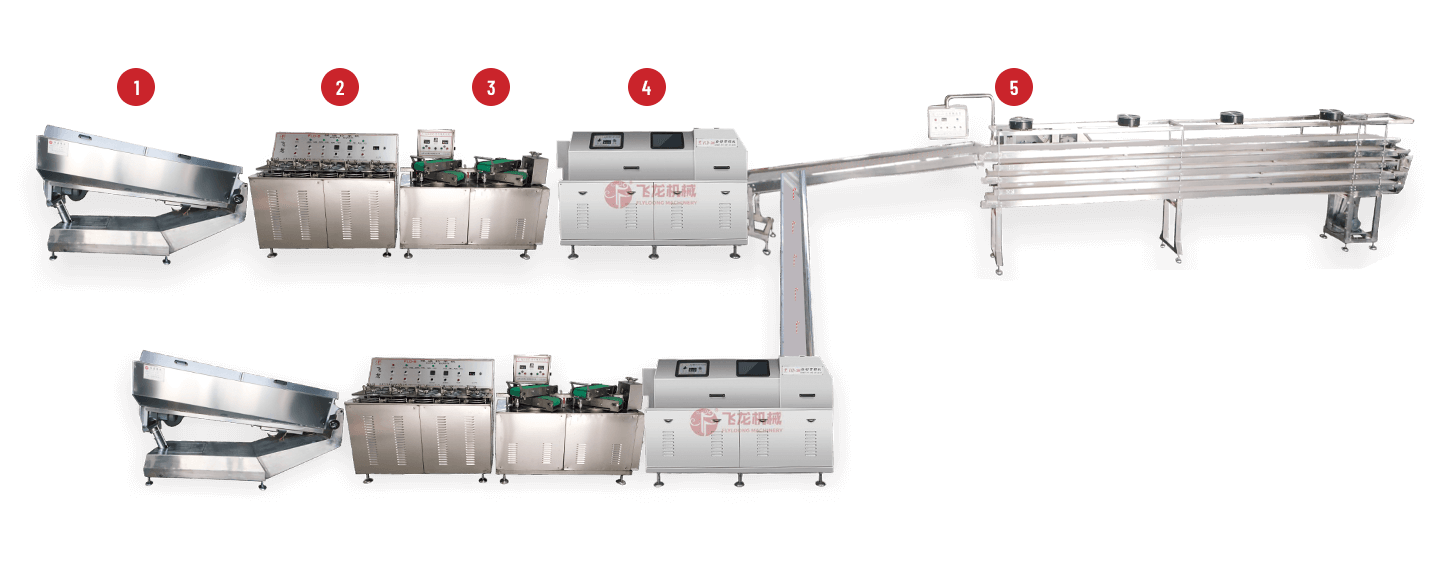
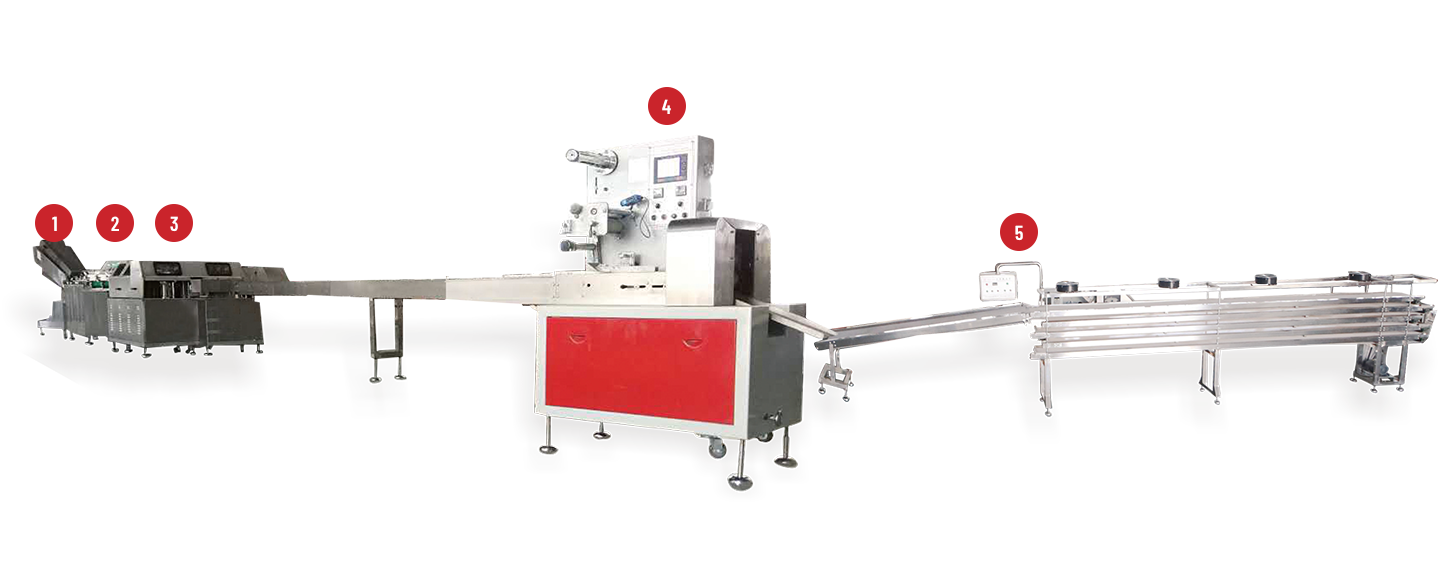
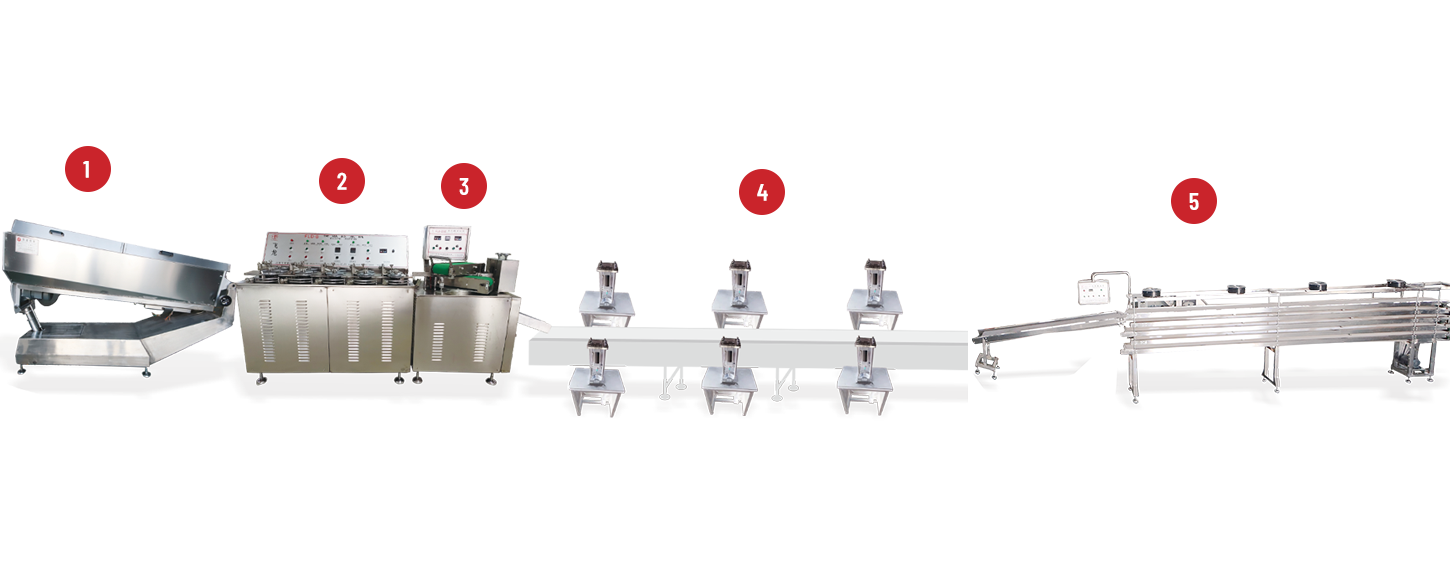
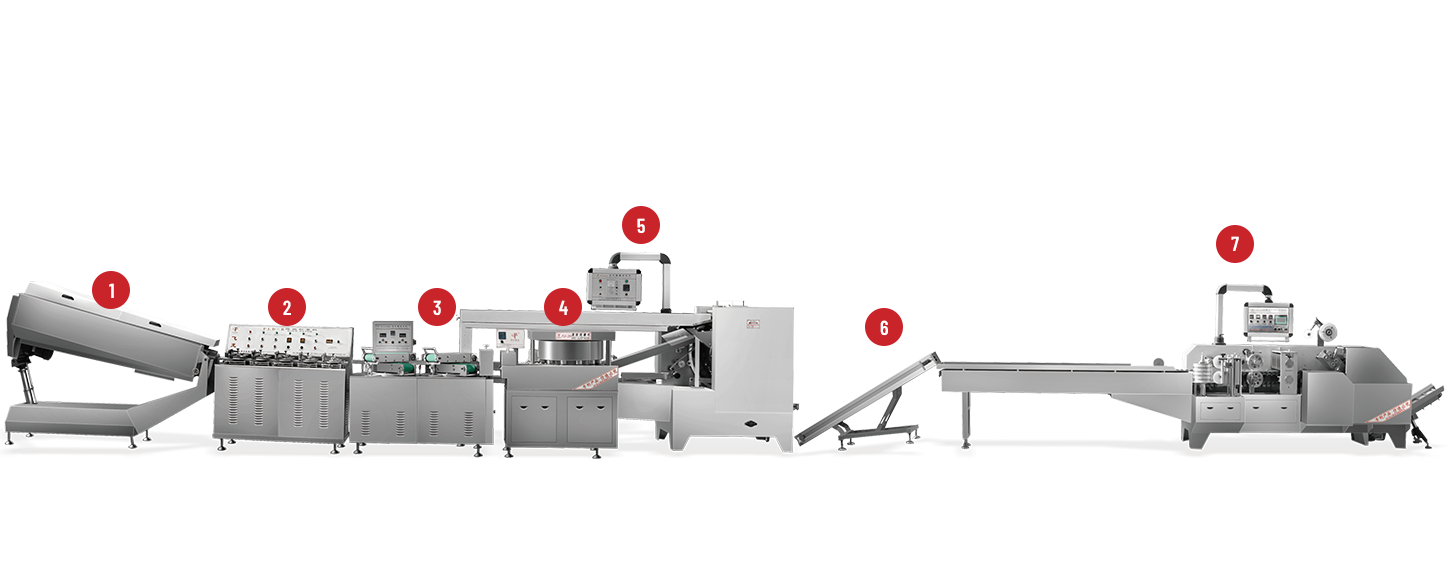
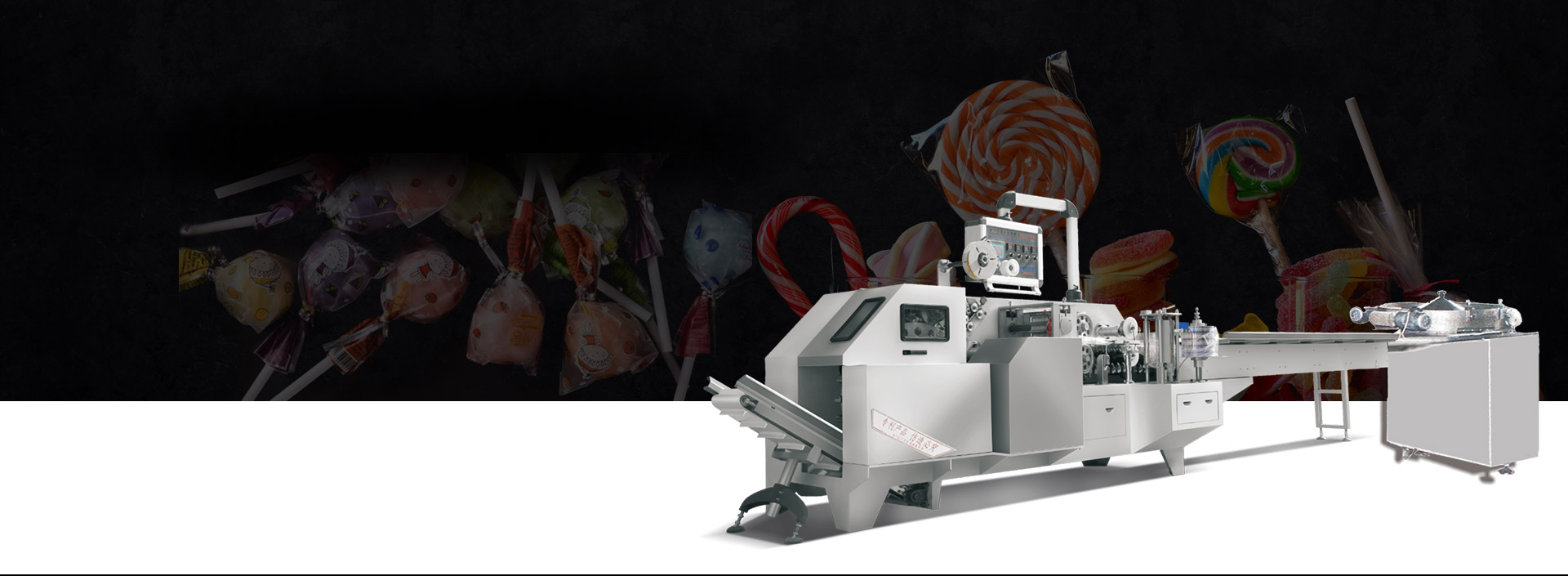
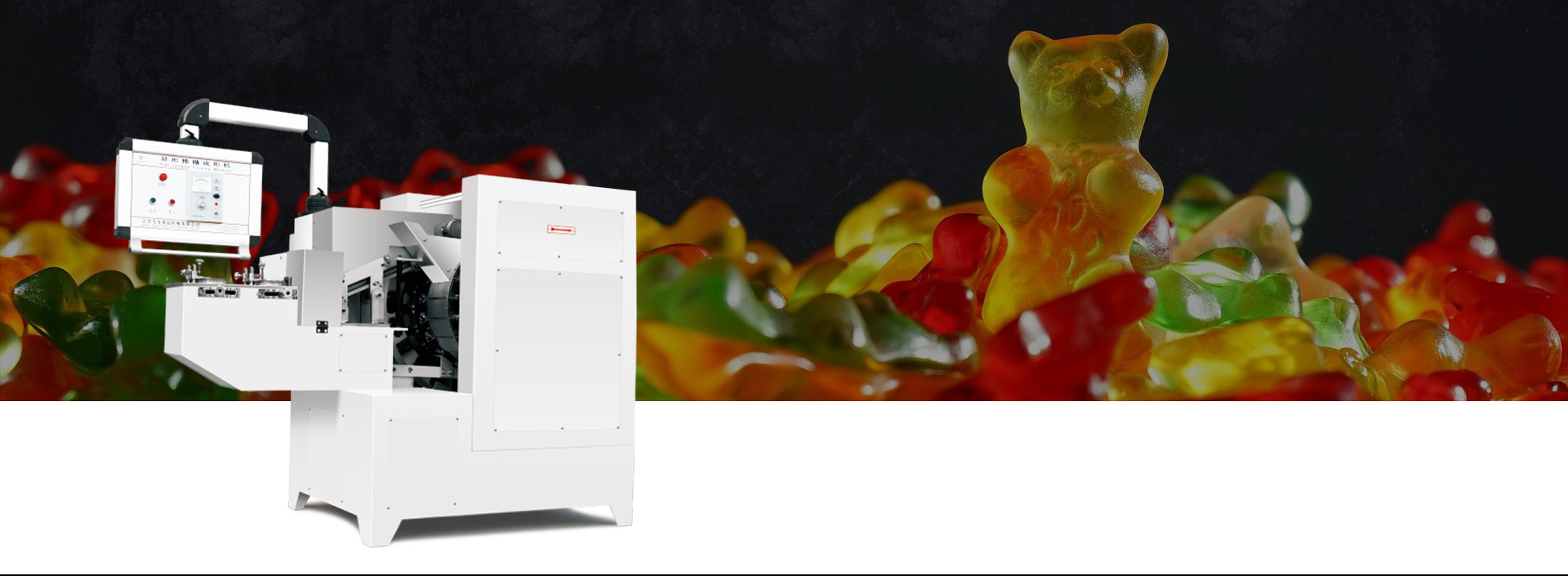
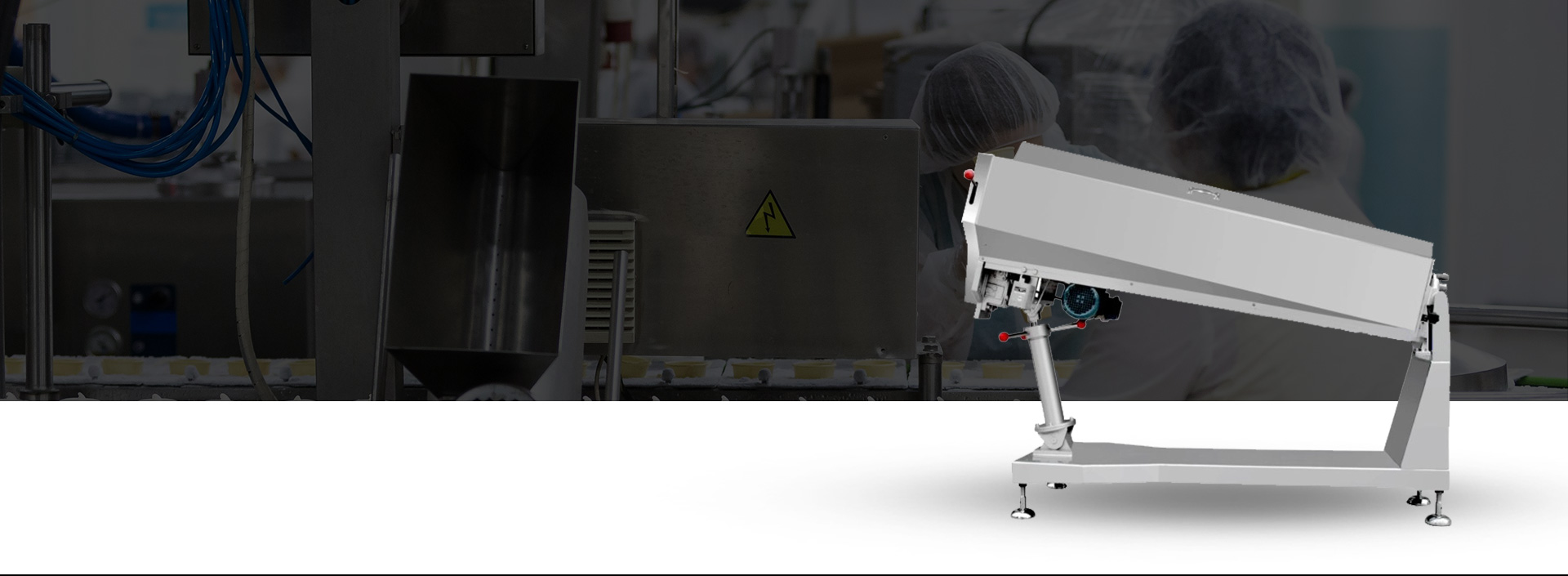
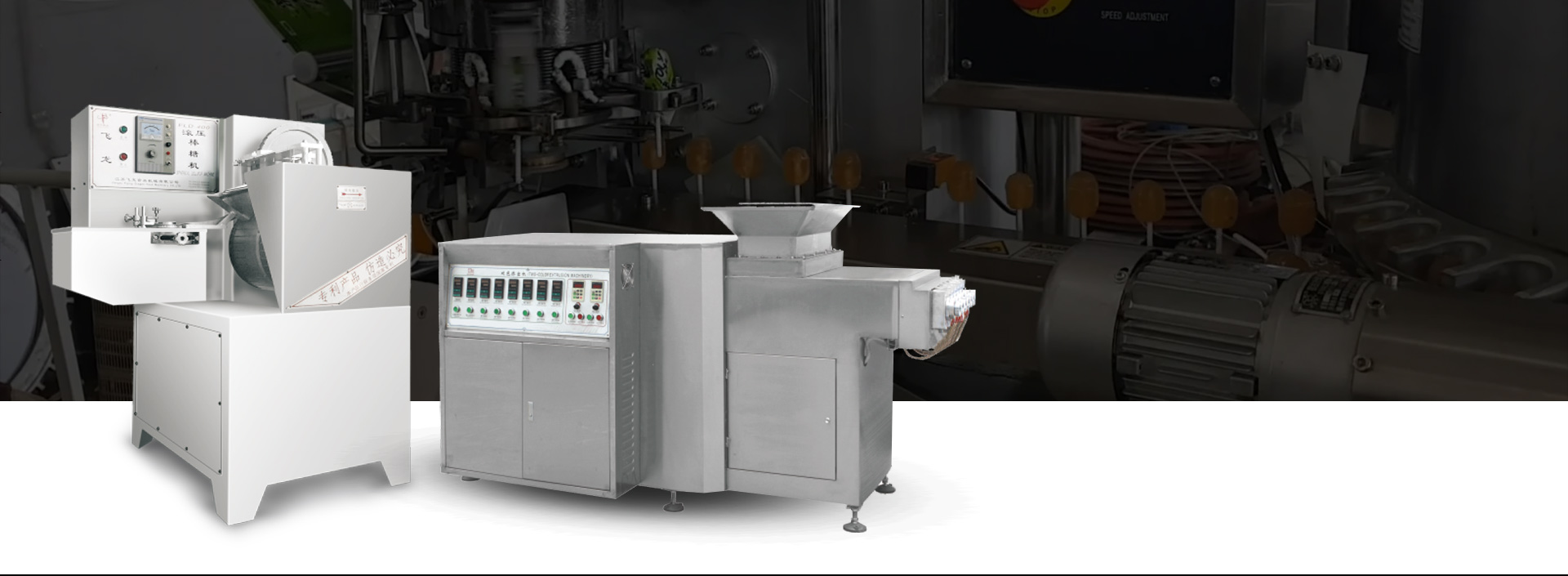
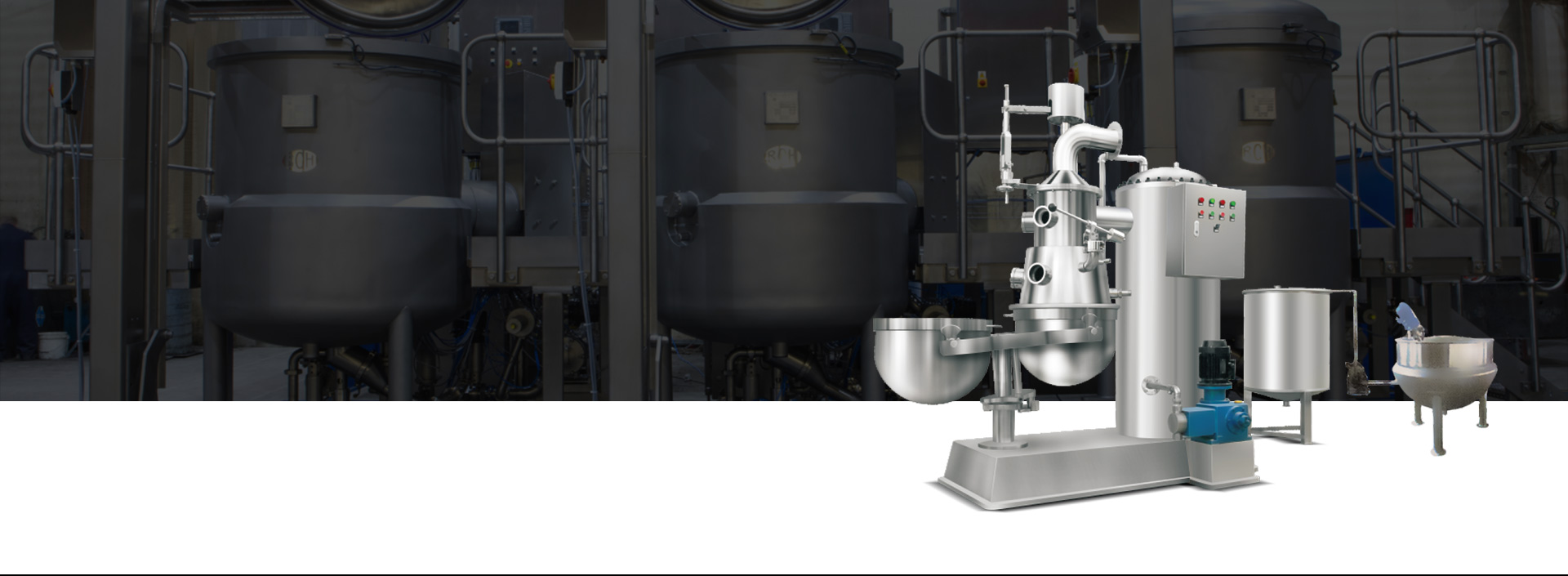
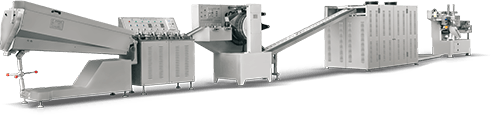
In many food factories, production is less about a single machine or a single task. It is more about movement that never really stops. Ingredients come in, move through different stages, change shape along the way, and then leave the system as finished products. When this movement feels steady, the whole factory feels easier to manage. When it becomes uneven, even small delays start to spread from one point to another.
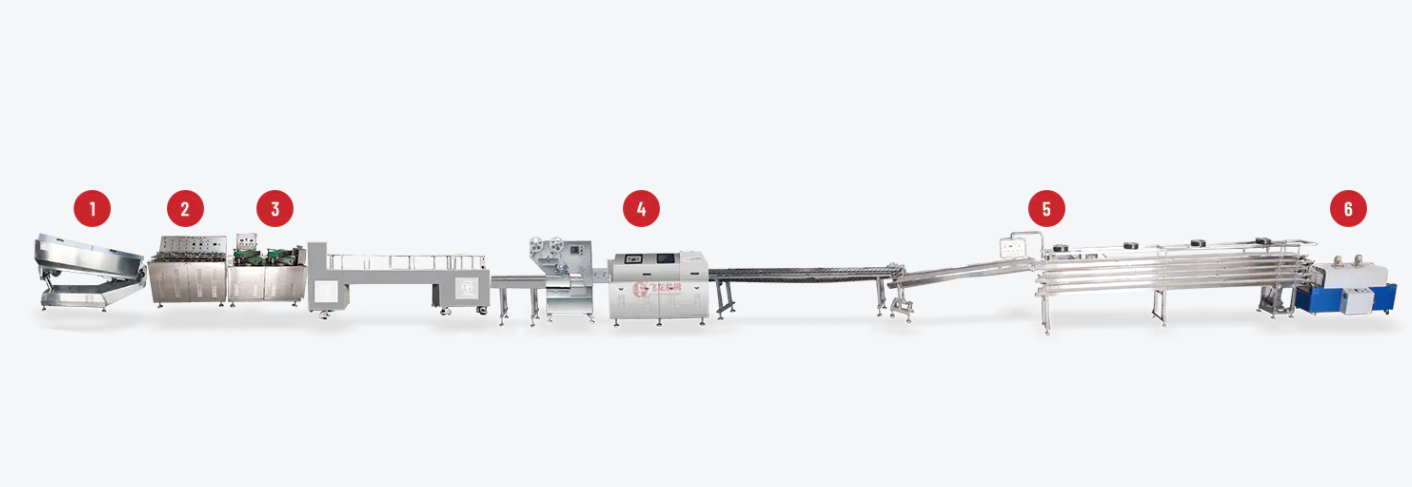
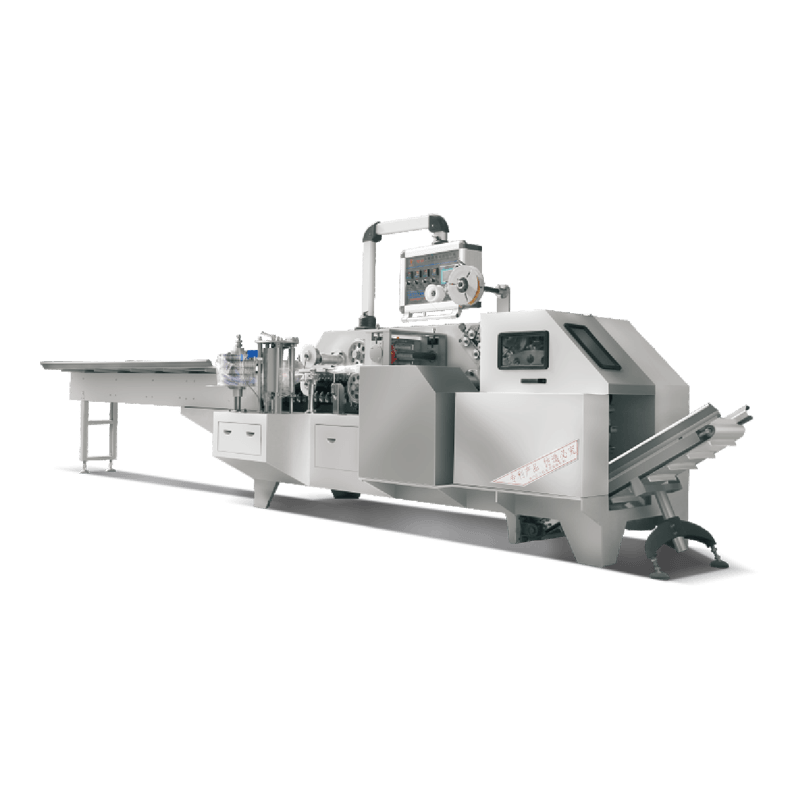
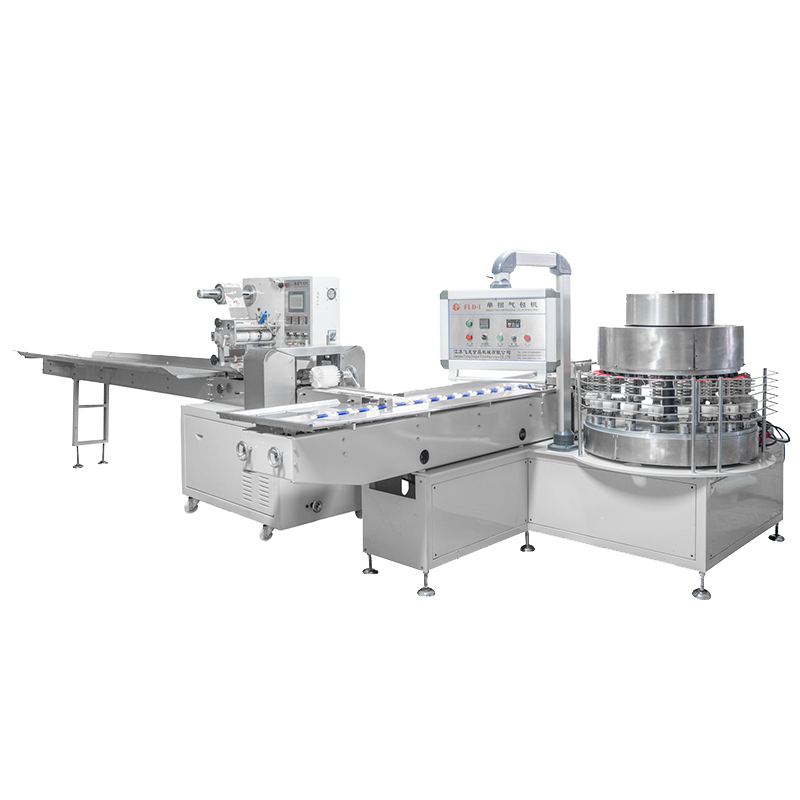
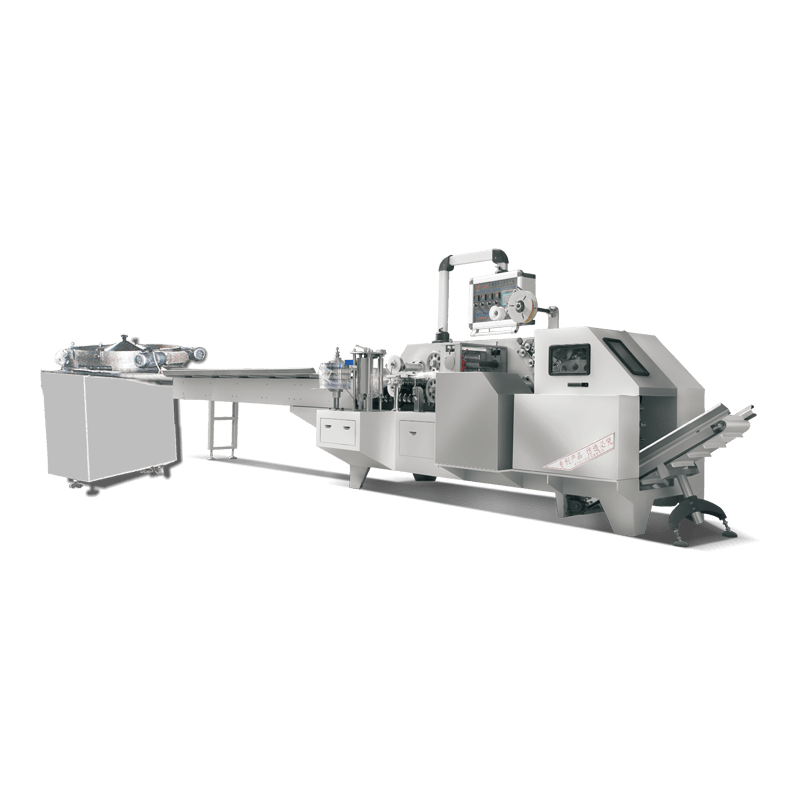
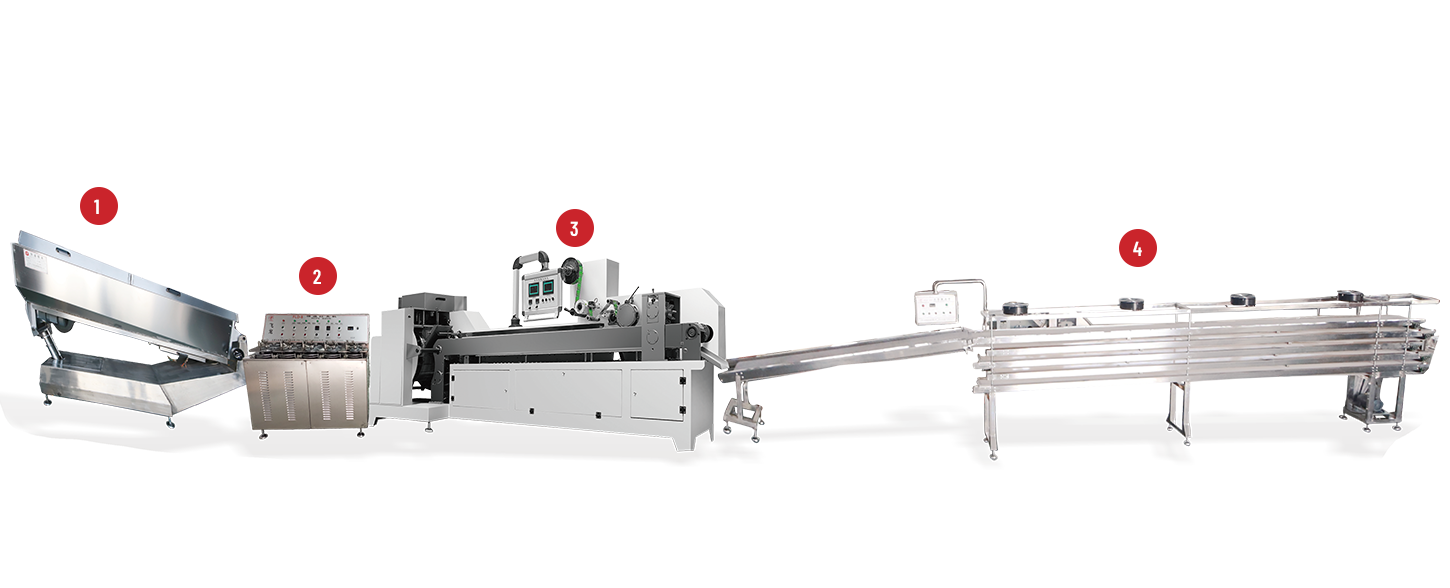
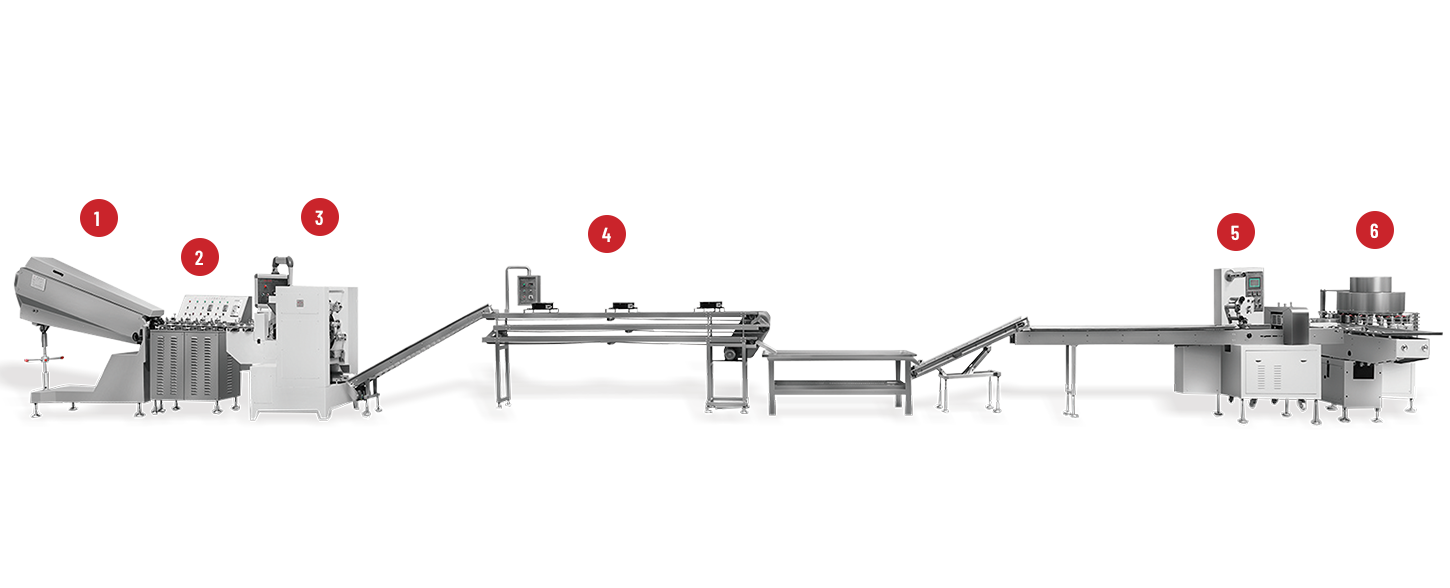
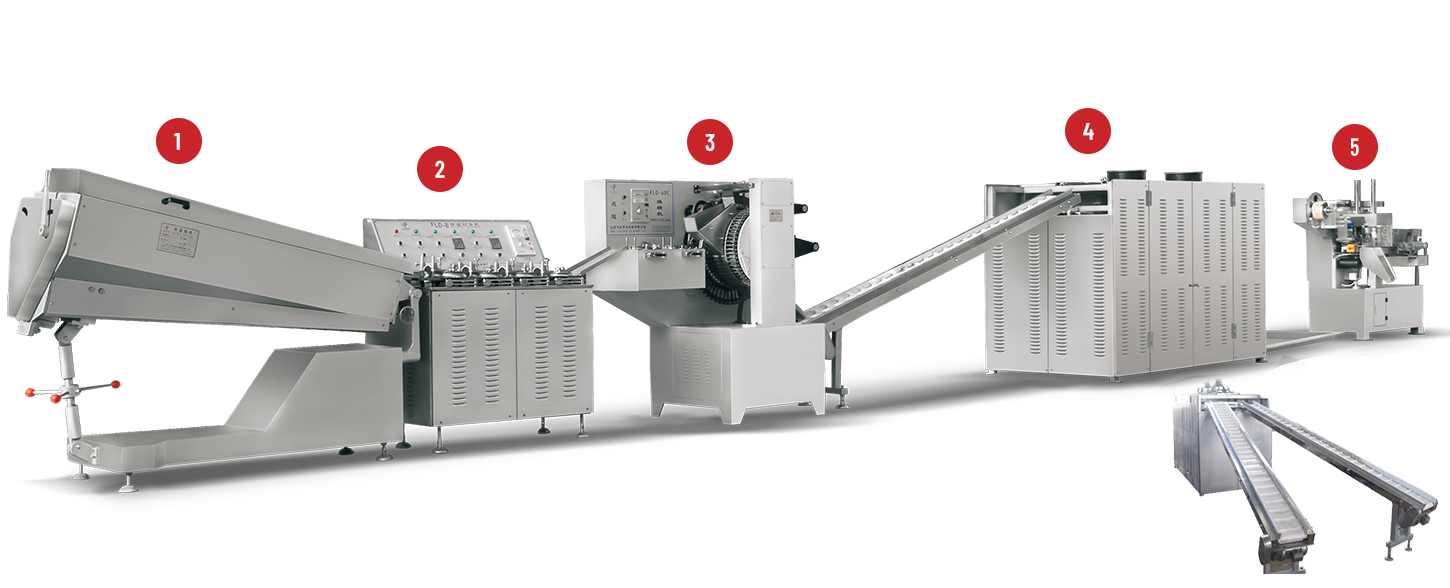
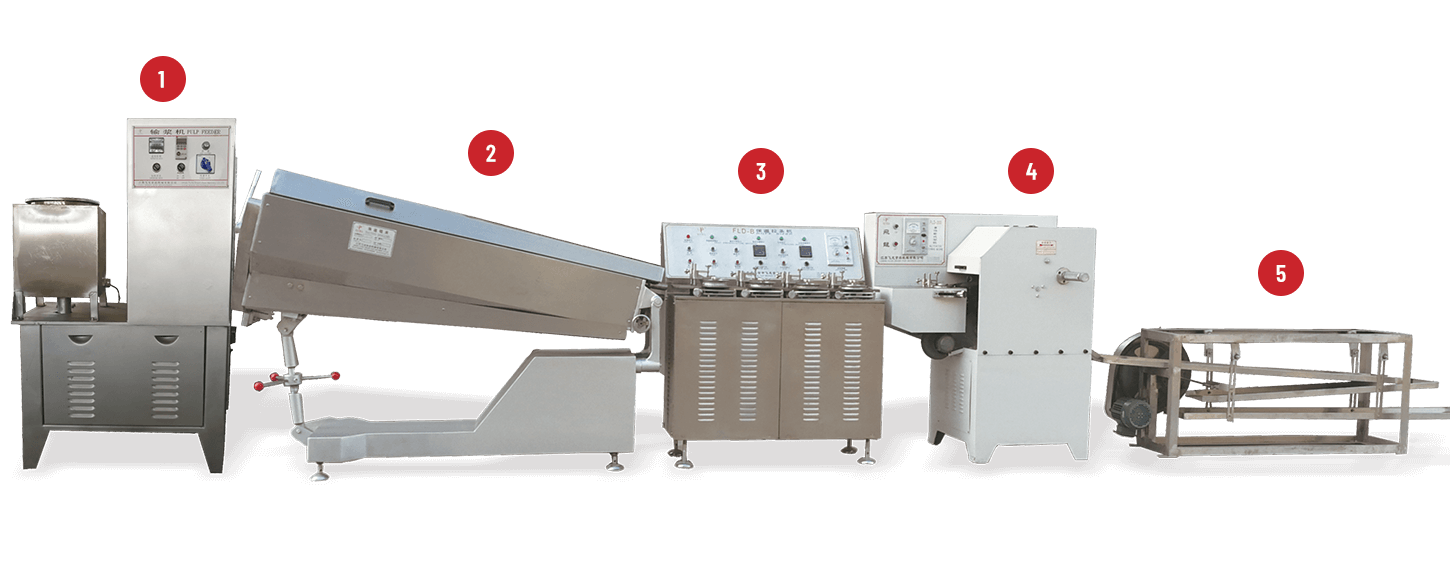
Candy production line is built to guide this movement. They do not simply perform one job. They connect different stages into a continuous path. Materials do not jump randomly between stations. They follow a direction that is already defined. This structure is what helps factories keep material flow smooth.
Smooth flow does not always look dramatic. It is often quiet. Materials move forward without stopping too often. Each step receives what it needs without long waiting time. The line keeps things moving in a way that feels natural rather than forced.
What does smooth material flow actually mean in a candy factory?
People tend to simplify what smooth flow means, but on actual candy production lines, you see its impact through lots of small, everyday details. It means no batch sits idle any longer than necessary. Every workstation gets materials at a steady, predictable rate, and finished semi-products move onward without building up huge stacks or leaving empty gaps on conveyors.
Candy lines handle materials in all different states: raw base ingredients at the start, half-finished candy mid-process, and fully molded sweets waiting for packaging further down the line.
With steady flow, all these materials move along one clear route. There's minimal downtime between processing steps. As soon as one station finishes its task, the next is ready to take the product, creating a seamless handoff all through the line.
If flow breaks down, minor disruptions pop up right away. One section gets backed up with excess candy while another sits underloaded. Staff constantly have to tweak timings to compensate. Constant small fixes wear workers out and drag down overall line speed over the shift.
Integrated production lines solve this by connecting every processing stage into one continuous path. Rather than disjointed, separate tasks, all handling becomes part of one unbroken material movement.
How do candy production lines guide material movement step by step?
In a factory without a clear structure, materials can move in different ways depending on the situation. Sometimes they wait too long. Sometimes they move too fast. This creates uneven rhythm across the workshop.
Automatic Candy Cane Line changes this by setting a clear path. Materials follow a fixed order. They enter from one side and move through each stage in sequence.
Each stage has its own role. One part handles preparation. Another shapes or processes the material. The next stage takes it forward. Instead of random movement, there is a guided direction that everyone follows.
This kind of structure helps reduce confusion. Workers do not need to decide where materials should go next. The system already defines it. Over time, this makes daily work feel more stable.
It also reduces unnecessary movement on the floor. Materials do not travel back and forth between stations. They move forward in a steady line.
Why is balance so important for smooth material flow?
Balance in a production line means each stage works at a pace that fits the others. If one stage is too fast, it creates pressure ahead. If another stage is too slow, it creates waiting behind.
Candy production lines help manage this balance by connecting stages in a controlled sequence. Materials are passed forward in a way that matches the overall rhythm of the system.
This reduces uneven workload. Instead of sudden bursts of activity, work becomes more even across the line. One station is not overloaded while another is idle.
A simple comparison helps show the difference:
| Flow Condition | Without Production Line | With Candy Production Line |
|---|---|---|
| Movement pattern | Irregular stops | Continuous direction |
| Workload | Uneven pressure | More balanced |
| Waiting time | Frequent pauses | Reduced gaps |
| Coordination | Constant adjustment | Natural alignment |
When balance improves, the whole factory feels less stressful. The flow becomes easier to follow, even during busy periods.
How do production lines reduce waiting time between stages?
Waiting is a very common problem on production floors. It mostly happens when one workstation finishes its work faster than the next one can take goods.
These short breaks don't look like a big deal at first, but they add up over time. Products get stuck between stations. Some areas get overcrowded, while others barely have any items to process.
Candy production lines connect every processing step tightly together. As soon as one task is done, goods move straight to the next station in a stable stream. All stages run as one continuous flow.
This means less idle time. Products won't stay stationary for long; they keep moving along the whole line.
It also stops goods from stacking up anywhere. With steady movement, there's no heavy buildup at single spots, and operators can manage the line much easier.
How does coordination affect material flow inside factories?
Factories rely on machines, yet matching the pace of different stations is still key. Every part of the line needs to run at a speed that fits the next station. If goods arrive too fast or too slow, the whole flow turns messy.
Candy lines sync the speed of all stations together. Goods pass from one work area to the next following the same steady rhythm for the whole line.
Workers don't have to spend all their time manually adjusting speeds. The connected line layout controls product delivery naturally, cutting small mistakes caused by constant manual tweaks.
Once stations work well in sync, running the factory becomes simpler. Staff can easily guess how materials will move, and spend more time checking product quality instead of fixing flow issues nonstop.
What role does continuous movement play in factory flow?
Continuous movement means materials do not stop frequently once they enter the system. They keep moving from one stage to the next with fewer interruptions.
Candy production lines support this by reducing breaks between processing steps. Instead of stopping and restarting at each stage, materials flow through the system in one connected path.
This does not mean everything moves at the same speed all the time. It means the movement does not break apart into separate stops. The flow stays active.
Continuous movement helps reduce delays. It also creates a more stable working environment. Workers can follow a steady rhythm instead of dealing with repeated pauses.
Over time, this consistency becomes part of how the factory operates each day.
How does material flow influence factory organization?
Material flow is closely linked to how a factory is organized. When materials move in a random way, the workspace can become cluttered. Items may appear in unexpected places. This makes it harder to manage space and track progress.
A candy production line helps organize this movement. Materials follow a defined path. They do not travel randomly across the floor.
This improves clarity in the workspace. Storage areas become more structured. Workstations remain clearer because materials follow a controlled direction.
It also makes it easier to understand where materials are at any moment. Workers do not need to search or guess. The flow itself provides structure.
Where do production lines have the biggest impact in workflow design?
The biggest impact is in how stages are connected. Instead of separate tasks, everything becomes part of one connected system.
Preparation leads into processing. Processing leads into shaping. Shaping leads into transfer. Each stage supports the next one in a clear sequence.
This reduces unnecessary movement between stations. Materials do not need to be handled multiple times without reason. They follow a forward path through the system.
| Workflow Stage | Role in Material Flow |
|---|---|
| Entry stage | Materials enter the system |
| Processing stage | Main transformation step |
| Transfer stage | Movement between steps |
| Output stage | Final exit of materials |
This structure helps make workflow design more predictable and easier to follow.
How does stable flow support daily factory operations?
Stable flow makes daily work feel more controlled. When materials move in a predictable way, it becomes easier to plan tasks.
Workers do not need to react constantly to sudden changes. Instead, they can follow a steady rhythm throughout the day.
It also reduces pressure during busy periods. Even when demand increases, the system keeps moving in an organized way.
Over time, this stability becomes part of the working environment. It supports smoother coordination, clearer communication, and more consistent operation across the factory.
How does a production line shape the overall rhythm of manufacturing?
Every factory develops a rhythm based on how materials move and how tasks are arranged. A candy production line helps define this rhythm in a structured way.
Instead of uneven movement, there is a guided flow. Materials enter, pass through each stage, and leave in a steady pattern.
This rhythm helps keep the factory stable even when production needs change. The system adjusts without breaking its overall structure.
In many cases, this steady movement becomes the foundation of daily operations. It influences how people work, how space is used, and how materials are managed from start to finish.
 +86-(0)515-8465666
 +86-(0)515-85566996
 +86-138 1559 9708
 flyloong@flyloongcn.com
 Home
Home